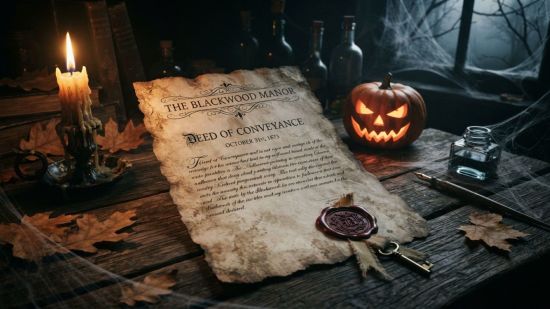
Strip away the ghosts and chainsaws, and a surprising number of horror movies are really about one thing: what happens to a person's stuff and their family after they die. Creaky inherited mansions, mysterious will readings, relatives who won't leave, secrets buried in the basement. Probate lawyers see the real-world versions of these plots every day, minus the supernatural special effects.
This Halloween, let's pull a few classics off the shelf and look at the estate planning lessons hiding in the shadows. Grab the popcorn. Maybe leave the lights on.
The Haunted House: Who Actually Owns this Place?
In The Others (2001), a mother and her children drift through a fog-bound mansion, unsettled by "intruders" who turn out to be the new living owners. The twist is spooky, but the legal question underneath is ordinary: when someone dies, the house doesn't stay theirs forever. It passes by will, by trust, by how the deed is titled, or by state intestacy law if nothing was planned.
Crimson Peak (2015) takes this further. Allerdale Hall is a crumbling family seat kept afloat by a brother and sister who marry wealthy outsiders for their money. It's a gothic reminder that inherited real estate is often a burden as much as a gift: taxes, repairs, mortgages, and maintenance all pass along with the keys.
The real-world lessons:
• Check how your home is titled. Joint tenancy with right of survivorship, tenancy by the entirety, transfer-on-death deeds (available in many states), and trust ownership can each move a house outside probate. Sole ownership with no plan usually means it goes through court.
• Property in another state can mean a second probate. Owning a vacation cabin, or a gloomy ancestral manor, in another state often triggers "ancillary" probate there too. Holding it in a revocable living trust is a common fix.
• Plan for the costs, not just the asset. If heirs can't afford to keep a property, say whether it should be sold and how proceeds are split.
And for the Amityville Horror fans: whether a seller must disclose that a home was the site of a death or is "reputedly haunted" varies by state. Executors/Personal Representatives selling a family home should ask a local attorney or agent what disclosure rules apply.
The Midnight Will Reading: Conditions, Contests and Greedy Relatives
The Cat and the Canary (1927, remade in 1939) is the granddaddy of the genre. An eccentric millionaire's will is opened at midnight, 20 years after his death, in his decaying mansion. The heir inherits everything, but only if she is judged sane. Otherwise, the fortune passes to a backup heir. Cue relatives creeping through secret passages trying to drive her mad.
It's a perfect setup for three real legal concepts:
• Conditional gifts. You can attach conditions to an inheritance, such as finishing school or reaching a certain age. But courts may refuse to enforce conditions that are illegal, impossible, or against public policy. A trust with clear terms and a trustee is usually a far better tool than a riddle in a will.
• Contingent beneficiaries. The "backup heir" is actually good planning. Naming who inherits if your first choice can't or won't is one of the simplest ways to avoid a mess.
• Will contests and undue influence. When relatives gather like vultures, contests follow. Common grounds include lack of capacity, undue influence, fraud, and improper execution. Clear documents, proper witnessing, and sometimes a no-contest clause (enforceability varies by state) help keep the peace.
One myth worth busting: the dramatic, everyone-in-the-library will reading is mostly a Hollywood invention. In most U.S. states, including Missouri, the will is filed with the probate court, and the executor notifies beneficiaries in writing. Much less candlelight, far fewer screams.
For a modern take on scheming heirs, Ready or Not (2019) and the mystery Knives Out (2019) both show how a family fortune can bring out the worst in people, and how a last-minute change to an estate plan can blow everything up.
The bottom line is that an experienced estate planning attorney, such as Vanessa Starke at Starke Law Offices, LLC in Blue Springs, Missouri, can help you build an estate plan that avoids scary surprises for your heirs and loved ones.