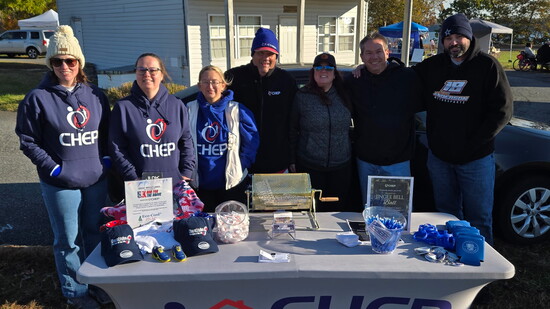
For more than three decades, CHEP has evolved by paying attention to what its communities need. What began in 1990 as the Chesapeake Health Education Program, providing professional training and continuing education, eventually expanded its mission when another need became increasingly apparent: veterans facing homelessness and housing instability.
Today, CHEP operates veteran programs in Maryland and South Carolina while continuing its original educational work through CHEP Professional Services. In 2025, the organization also opened CHEP Outpost, a nonprofit resale store in Rising Sun that generates revenue to support the organization’s mission. “We've been willing to grow and change when we see a need and believe we can do something meaningful about it,” said Brekke Autry, Vice President of Strategy & Advancement.
For veterans entering CHEP’s programs, that help begins with stable housing, but the ultimate goal reaches much further. Veterans arrive under vastly different circumstances. Some have no income, while others are employed but cannot find affordable housing. Health concerns, transportation problems, debt, job loss, divorce, or several simultaneous challenges can all contribute to housing instability.
“I think it could happen to a lot more people than we like to believe,” Autry said. “There's no one type of person who experiences homelessness, and there's no one veteran homelessness story.”
Once a veteran has a safe place to live, CHEP’s case managers help identify individual barriers and goals, from income and benefits to transportation and permanent housing. “We help, but we don't take over,” Autry said.
CHEP also encourages veterans to envision possibilities beyond their immediate circumstances. Recently, an Army veteran working in banking spoke to residents about VA home loans and homeownership.
“Are all of our veterans ready to buy a house? No. Some may be one day, though,” Autry said. “We don't want to set the ceiling at ‘not homeless.’”
Elvado Smith offers a powerful example of what can happen through working with CHEP. An Air Force veteran, he initially came to CHEP as a resident after experiencing homelessness. He completed the program, secured permanent housing, and ultimately purchased a home.
Then, he returned. Today, Elvado works for CHEP as a Peer Support Specialist, bringing an understanding to newly arrived veterans that comes from having experienced the program himself.
“He knows what that feels like because he's actually lived it,” Autry said. “There's a credibility in that you can't manufacture.”
For Autry, lasting stability is an important measure of success. She wants veterans to reach a point where a car repair, unexpected bill, or other ordinary setback becomes an inconvenience rather than a threat to their housing.
Community support helps CHEP continue assisting veterans even after they graduate from its programs. Autry said people can contribute in myriad ways. Volunteering, shopping or donating at CHEP Outpost, and providing financial support all help. Other contributions like offering employment, making professional connections, and sponsoring events are also ways to get involved. “You might be the reason someone gets an opportunity they wouldn't have had otherwise, or the reason a rough month is just a rough month and not the beginning of another crisis,” she said.
For an organization built around helping people move forward, gratitude comes from seeing what can happen when many people contribute to that effort. “I see staff work incredibly hard to earn the trust of our veterans, volunteers give their time without being asked twice, and community partners step up because they genuinely want to help,” Autry said. “Then I get to see a veteran move into a home, find a job, come back to visit or call just to tell us they’re doing well.”
Ultimately, Autry hopes the community sees the people behind the circumstances.
“They’re parents, coworkers, neighbors and friends, and experiencing homelessness doesn’t define who they are or what they’re capable of,” she said. “I hope people see the person first and recognize that they can play a part in what comes next.”