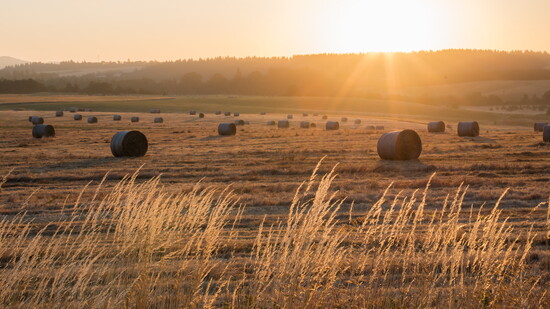
In today’s food industry, convenience often outweighs connection. Beef moves through massive systems designed for scale, efficiency, and profit, leaving little room for consumers to understand where their food comes from or who stands behind it. For local ranchers like Cody Wiseman of Bar W Ranch Meat Co. in Bonne Terre, that disconnect is exactly what he set out to change.
Cody comes from generations of farmers who worked the land, sold cattle through the sale barn, and understood early on that agriculture isn’t just an industry—it’s a responsibility. In 2008, long before “farm-to-fork” became a marketing phrase, Cody began selling whole and half beef directly from his farm to local families. His goal was simple: provide honest, farm-fresh beef at a price working families could afford, while keeping the process transparent from pasture to plate.
That mission was put into sharp focus during the COVID-19 pandemic, when grocery shelves emptied and supply chains failed. One day, a woman walked into Cody’s shop in tears, explaining she didn’t know how she was going to feed her family. Without hesitation, Cody loaded her vehicle with beef and sent her home. The moment wasn’t about recognition—it was confirmation that direct-to-consumer agriculture still mattered. It also reinforced his belief that cutting out excess middlemen was the most cost-effective and sustainable way to feed people.
Today, Bar W Ranch specializes in USDA-inspected beef sold directly to consumers, offering whole and half beef orders alongside individual cuts. A half beef typically lasts a family of four 12 to 14 months, making it one of the most economical ways to reduce grocery costs while maintaining quality. Cody works hard to stay $1 to $1.50 per pound below competitors whenever possible, even as the price of cattle continues to rise nationwide.
Bar W Ranch operates across multiple farms and feed lots, with a cow-calf operation averaging 60 to 75 head and 40 to 80 cattle in the feed yard at any given time. The cattle are raised without growth hormones and under a clean, natural program. If an animal requires antibiotics, it is immediately removed from the feed program and sold through the sale barn instead—never entering the beef supply destined for families’ freezers.
Animal welfare and performance go hand in hand, Cody explains. Cattle thrive under low-stress conditions and structured routines, including consistent daily feeding schedules. Automatic water systems ensure constant access to clean, fresh water, while feed is sourced locally whenever possible. Corn comes from a neighboring farmer, hay is baled through partnerships with area producers, and nearly every step of the process supports the surrounding agricultural community.
Despite operating on approximately 385 acres, Cody leases the majority of his land—an increasingly common reality in modern agriculture. With land prices soaring and cow-calf margins averaging roughly $100 per head, owning land outright is often not financially feasible. Instead, Cody relies on partnerships and long-term leases, a model he believes could strengthen both local economies and food security if more producers worked collaboratively rather than competitively.
Ranching, however, is not without sacrifice. Machinery costs, land taxes, unpredictable weather, and long hours mean Cody is often at the mercy of the seasons. He’s missed practices, games, and family events because cattle don’t wait and farming doesn’t pause. “They depend on you,” he says. “There’s no one else coming.”
Yet the reward outweighs the cost. When families understand what they’re eating and where it comes from, it changes the way they approach meals. Having high-quality beef on hand makes dinners easier, grocery budgets more manageable, and time around the table more meaningful. For Cody, there’s pride in knowing he’s helping families enjoy steakhouse-quality meals at home—without sacrificing integrity or affordability.
As large corporations and foreign entities continue buying American farmland, Cody believes supporting local producers has never been more important. A member of the Missouri Cattlemen’s Association, he hopes to expand educational efforts, feeding programs, and partnerships with food pantries, shelters, and local restaurants in the future.
“Learn to take a piece of the pie instead of the whole pie,” Cody says. “If we all did that, we’d be better neighbors.”
At Bar W Ranch Meat Co., that philosophy isn’t a slogan—it’s a way of life, rooted in the land, shaped by community, and sustained by the belief that feeding people well still matters.