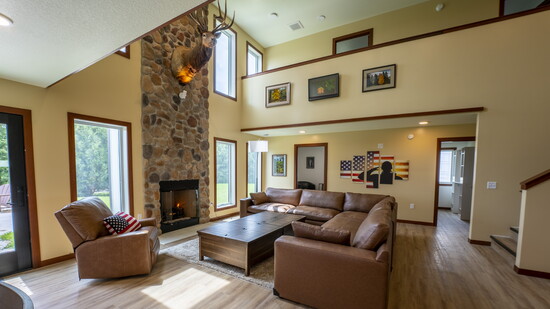
Tucked away on acres of farmland in Winnebago, MN, Bravo Zulu House looks much like any other well-kept home. Step inside, however, and it becomes clear that this is not an ordinary place. For the veterans who live there, Bravo Zulu represents safety, dignity, and something many feared they had lost for good: hope. As America’s first all-military sober living home designed specifically for veterans with post-traumatic stress disorder, Bravo Zulu is confronting a long-ignored gap in veteran care and changing what recovery can look like after treatment ends.
Bravo Zulu House officially opened in May 2025, welcoming its first resident in July. The nonprofit was founded on a stark reality: sobriety is often the first requirement for effectively treating PTSD, yet until now there were no sober homes in the country built to support veterans dealing with both addiction and service-related trauma. “We are declaring war on PTSD,” says Cathy Von Eschen, marketing director for Bravo Zulu House. “There are veteran-only sober homes, and there are PTSD treatment facilities, but there was nothing that addressed both at the same time. We made history.”
The need for that history-making step is sobering. Approx. 7% of all veterans will experience PTSD at some point in their lives, according to the U.S. Department of Veterans Affairs. Research cited by the organization suggests that between 75 and 95 percent of veterans with PTSD also struggle with substance abuse, a combination that significantly increases the risk of life threatening issues.Despite this, most veterans discharged from inpatient alcohol and drug treatment facilities do not leave with a plan to address PTSD alongside their sobriety.
Bravo Zulu House exists to fill that void. The idea grew out of years of observation at Trinity Sober Homes in St. Paul, a network of 12 men’s sober living houses led by executive director Tim Murray. Trinity’s founder, Colonel Father Martin Fleming, noticed something striking over time: while veterans make up roughly seven to eight percent of the general population, nearly 30 percent of Trinity’s residents were veterans. When leaders looked closer, they discovered that many of those men also had untreated PTSD. “Once you dig under the surface,” Von Eschen explains, “you realize these are the veterans who are most at risk.”
Designed as a veterans-only sober living home, Bravo Zulu provides a structured, substance-free environment where residents can focus on recovery while receiving specialized support for PTSD. The home features private rooms, ADA-compliant accessibility, an elevator, and shared spaces that promote connection rather than isolation. Unlike clinical treatment centers, sober homes are unlicensed and do not provide therapy onsite. What sets Bravo Zulu House apart is its integrated care model and its full-time case manager, who connects each resident with individualized mental health services through licensed providers, including the Mayo Clinic Health System. Most PTSD treatment takes place offsite or via telehealth, ensuring veterans have access to top-tier care while maintaining the stability of sober living.
A live-in house manager, a veteran in recovery, is present around the clock. He serves as both a peer and a guide, helping maintain the rhythm of the house while offering daily support. The pace at which new residents are admitted is intentionally slow. With 12 bedrooms available, the organization is focused on ensuring the right fit and protecting the emotional safety of those already in residence. “These men are reliving the worst moments of their lives while trying to stay sober,” Von Eschen says. “We’re very mindful of the cadence. Healing takes time.”
Bravo Zulu approaches recovery holistically, addressing mind, body, and spirit. Residents participate in 12-step programs, fitness routines, spiritual counseling, and recovery support services, while also benefiting from two distinctive onsite programs: dog therapy and hydroponic gardening. Rescue dogs provide companionship and emotional grounding, easing anxiety and encouraging routine. Gardening offers a tangible sense of purpose and accomplishment, something many veterans miss after leaving the structure of military life. Together, these elements help residents rebuild not just sobriety, but identity.
The home itself plays a critical role in that process. From the moment veterans walk through the door, the space feels warm and intentional rather than clinical. Much of that atmosphere comes from the work of Susan Kaulbars, owner of Framing Solutions, who donated and curated 37 large-scale framed art pieces throughout the house. Kaulbars sourced nature photography and underwater imagery, carefully avoiding faces and overly personal scenes. “My goal was escapism,” she explains. “Images where someone could imagine themselves there, sitting in a garden or near the water. I didn’t want it to feel like a hospital.”
Each piece was custom-framed to create depth and individuality, transforming hallways, bedrooms, bathrooms, and common areas into spaces that feel lived in and cared for. One of the first residents described his arrival as feeling like “walking into a big giant hug.” For Von Eschen, that reaction captured the heart of the mission. “We built a gorgeous facility,” she says, “but the artwork made it a home.”
Bravo Zulu House also recognizes that the impact of PTSD and addiction extends far beyond the individual veteran. When one person serves, the entire family serves, and the invisible wounds of war often leave spouses, children, and loved ones carrying secondary trauma. Through its family support initiative, Healing Together, Bravo Zulu offers resources designed to help families reconnect, rebuild trust, and reclaim hope after years of strain and uncertainty.
While the current home serves men, the organization is already looking ahead. In spring 2027, Bravo Zulu House plans to open America’s first all-military sober living home for women veterans with PTSD in Mankato, Minnesota. Women are the fastest-growing segment of the veteran population, and an estimated 5,000 to 6,000 women veterans leave treatment each month with PTSD or a form of Military Trauma according to Bravo Zulu House. Yet facilities tailored to their specific needs remain virtually nonexistent. The nonprofit is raising $2 million to build an ADA-compliant home with private rooms, accessible bathrooms, and shared spaces designed to foster safety, camaraderie, and healing. “This is more than a house,” Von Eschen says. “It’s a sanctuary and a launchpad for recovery.”
As a nonprofit less than two years old, Bravo Zulu relies heavily on community support. The organization encourages involvement through volunteering, financial contributions, and simple advocacy—opening doors, making introductions, and helping spread awareness of its mission. “We’re not a homeless shelter,” Von Eschen emphasizes. “We’re a transitional home for veterans who have already done the hard work of treatment and need the right environment to keep moving forward.”
For the veterans who call Bravo Zulu House home, that environment can mean the difference between relapse and recovery, isolation and connection, despair and hope. In a country still grappling with how best to care for those who served, Bravo Zulu stands as a powerful reminder that healing is possible when sobriety, trauma care, and human dignity are finally addressed together.