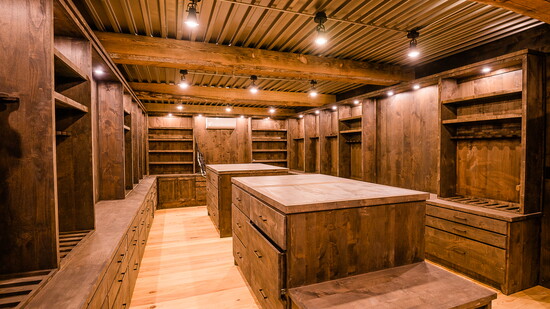
When people hear the phrase custom cabinetry, they might assume it simply means cabinets designed for a particular house. That definition only tells part of the story. For the women behind this local custom cabinetry company, “custom” begins long before a cabinet door is installed and continues through the final build and beyond.
Both owners, Jaclyn Felts and Kelli Cunningham, come from homebuilding backgrounds. Their families are builders, and over time they found themselves regularly visiting job sites and helping with projects, and cabinetry become their focus.
“Cabinetry is in almost every room of the house,” they explained. “It’s not just kitchens and bathrooms. There are mudrooms, drop stations, closets, wine rooms, built-ins around fireplaces, even hidden rooms.”
Today their company takes on custom cabinetry projects from inception to completion, even including finish details such as lighting. The goal is simple: to help clients design cabinets that work for the way they live with a focus on functionality, longevity and aesthetic appeal.
Built On-Site
Many assume cabinets are designed for the house but constructed somewhere else and then delivered. For Paloma Cabinets, the process is different. “The materials arrive at the job site (where) our lead carpenter measures, cuts and builds everything there,” they say. This approach allows them to build to the project. Plans change. Measurements shift. A wall may be slightly off, or a room might be resized during the building. Because the cabinets are built on-site, adjustments can happen in real time, rather than forcing a pre-made cabinet to fit.
Design Details
When it comes to materials, white oak is currently one of the most requested options for stain grade. “Everyone loves white oak,” Felts and Cunningham said. “But it comes with a higher price.” Part of their job is helping clients achieve the look they want within their budget. If a homeowner plans to paint cabinets, they would suggest a paint grade birch. Other popular materials include walnut and knotty alder, depending on whether a client prefers a cleaner modern look or something more rustic.
Design details are constantly evolving. Cabinet fronts can include rattan panels, glass inserts, metal accents or decorative cutouts. Built-ins are increasingly designed to resemble high-quality furniture pieces, such as bathroom vanities with legs or cabinetry flanking a fireplace that looks like a freestanding cabinet. In mudrooms, locker-style storage has become sought after. Pull-out utensil drawers, hidden spice racks, shelves designed for bulky appliances and built-in storage for mudrooms are just a few of the features clients often request.
Function Meets Design
Felts and Cunningham work closely with clients to help them think through practical details that affect daily life. They often talk through storage needs room by room, offering suggestions based on what they have seen in other homes. “We try to balance functionality with what someone wants visually,” they explained. “A home should look the way you want it to, but it should also work well for the way you live.”
That balance between appearance and usability is ultimately how they answer the original question. Custom cabinetry is not simply about style or fitting into a space perfectly. It is about building storage, organization and design around the way a household actually functions. And sometimes the difference between custom and prefab cabinets comes down to something simple: the ability to build exactly what the space, and the people living in it, needs to thrive.
Visit Paloma Cabinets at 1211 E. Main St. in
Fredericksburg. Call them at 830-268-1221, or email info@palomacabinets.com.
Visit them online at PalomaCabinets.com.