When a child struggles at school, the impact reaches far beyond the classroom. It touches family routines, emotional well-being, confidence, and long-term hopes for the future. Academic struggles don’t have a demographic profile, they affect parents and children regardless of their financial stature or circumstance. Parents often find themselves navigating meetings, advocating for accommodation, and reassuring a child who may feel frustrated or left behind that they’re loved and they matter. Honestly put, it’s hard.
Individualized Education Programs (IEPs) play an important role in identifying and addressing a student’s needs, but for some children, even with support in place, a traditional school environment simply isn’t enough. Often, struggling children feel ostracized and become reclusive and depressed. This can bring an enormous weight upon a family. For families facing this reality, a different educational setting built around smaller class sizes, integrated support, and intentional belonging can be transformative. Local charter schools like Pepin Academies exist specifically to lift-up students with learning disabilities who need more than a standard approach to thrive.
Founded in 1999, Pepin Academies began when families sought a better way to educate their children as they prepared for high school and beyond. Pepin Academies serves students in grades 3–12, along with a Transition Program for young adults 18–22. The Transition Program focuses on real-world readiness, with students working at job sites alongside community partners, building independence and life skills.
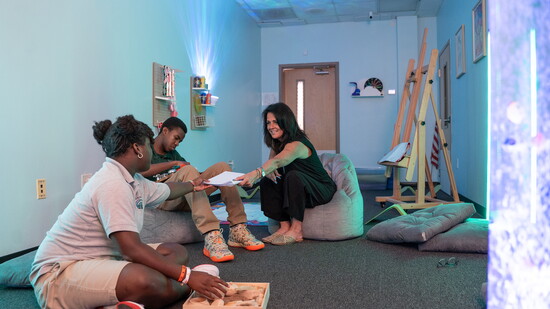
The mission at Pepin Academies is clear and deeply personal, empowering students with learning disabilities to maximize their potential in a positive therapeutic educational environment. That mission guides every aspect of the school’s culture, structure, and daily experience. While every student has an IEP, the support doesn’t stop there. According to Jeff Skowronek, Pepin Academies Executive Director, the school takes a holistic approach that rethinks how learning support should work. “We disrupt the traditionally flawed idea that therapy for learning disabilities is something that happens after school and then somehow applied in class the next day,” he explained. Instead, therapeutic services are embedded directly into the school day. Speech-language pathologists, occupational therapists, counselors, and teachers work side-by-side in real time, addressing student needs as they arise.
This integrated model allows students to receive individual and group therapeutic support without feeling separated from peers. While the environment is therapeutic by design, Pepin Academies intentionally maintains a traditional school experience. Students participate in electives, career-technical education, sports, clubs, and performing arts to ensure students feel included, engaged, and part of a deeper community.
One of the most impactful differences families notice at Pepin Academies is class size. Smaller classrooms allow for daily differentiation, frequent checks for understanding, and meaningful teacher-student relationships. Pepin Academies motto, “Where Belonging Leads to Learning,” reflects a core belief: students must feel safe and accepted before academic growth can truly occur. In smaller settings, students are known not just by name, but by learning style, strengths, and goals. Children feel seen and know they matter.
Confidence is often the missing piece for students who have struggled academically. At Pepin Academies, rebuilding confidence is intentional. Targeted academic support is paired with strengths-based practices and a restorative school culture. As students experience success, sometimes for the first time in their lives, their self-belief grows. When students feel valued and safe, they’re more willing to embrace challenges. Over time, they discover their strengths and realize achievements they may have never imagined. For a parent, this is one of the greatest gifts. “I recall a student who came to us non-verbal and went on to receive his master’s in language pathology,” shared Skowronek.
Family partnership is another cornerstone of the Pepin Academies model. The school maintains consistent communication with parents through IEP meetings, newsletters, campus events, and designated points of contact to address concerns. Parent education opportunities and active PTAs further strengthen collaboration. Families are not just given information. They’re valued partners in their child’s journey.
Pepin Academies understands that while the student is the individual focus at school, the journey carries over to their everyday life at home. Where there is genuine struggle, charter schools like Pepin Academies prove there is a meaningful way to overcome and inspire.
“We disrupt the traditionally flawed idea that therapy for learning disabilities is something that happens after school.”