In Eagan and surrounding communities, families are quietly navigating challenges that often go unseen. For parents of children with autism, everyday moments like sitting at the dinner table, responding to a name, or walking safely past a pond can feel out of reach. And they are far from alone. Today, 1 in 31 children in the U.S. has autism, making early awareness and access to support more important than ever.
That’s why MN Behavioral Specialists came to be, offering something deeply meaningful: support that meets children where they are and helps them grow into where they are meant to be.
A Partnership Rooted in Purpose
Camille’s journey began early. Growing up with a cousin with special needs, she always felt drawn to this field. That interest turned into action in 2002 when she was invited to observe ABA therapy with a family.
“I’ve done almost everything within the ABA field,” Camille shared, reflecting on her path. “That gives me a different perspective when I’m working with families and staff.”
Paige’s story is equally personal. Diagnosed with Tourette’s at a young age, she experienced firsthand what it felt like to search for support that did not always exist. Her interest in psychology led her to work with children on the autism spectrum during high school, and she never looked back. She went on to earn her undergraduate degree in psychology, a master’s in clinical psychology, and later became both a Licensed Professional Clinical Counselor and a Board-Certified Behavior Analyst.
The two first worked together in 2007, managing a center that served dozens of children. After years of collaboration, a chance conversation sparked the idea to build something of their own. Not long after, MN Behavioral Specialists was born.
What Progress Really Looks Like
At MN Behavioral Specialists, therapy is not about quick fixes or surface-level changes. It is about building foundational skills that can shape a child’s future.
Children in the program receive 20 to 40 hours of therapy per week and receive one-on-one support tailored to their individual needs. For some, that means learning how to communicate for the first time. For others, it may involve sitting at a table, following instructions, or developing basic self-care routines.
“We’re preparing them for school and for life,” Paige explained. “We aim to build the foundational skills they need to learn within a school environment, so they can become more independent and require less support over time.”
That support extends beyond the center. The team works closely with families in their homes and communities, helping address real-life challenges. One example involved teaching a child how to walk safely near a pond without jumping in. Another focused on helping a family feel comfortable enough to take their child on a simple outing to a store.
“These moments might seem small to others,” Camille said, “but for these families, they are everything.”
The impact can be profound. Camille recalled a recent visit with a family whose child had once been nonverbal. Now, that same child greets his parents at the door and sits down to eat meals with them.
Paige shared another memory. “We had a child say ‘I love you’ for the first time. Those are the moments that stay with you.”
The Power of Early Support
One of the most important messages Camille and Paige want families to hear is this: trust your instincts.
If a child is not responding to sounds, making eye contact, or engaging with the people around them, it may be time to ask questions. Early support can make a meaningful difference, especially when introduced during the earliest stages of development.
“We hear from parents all the time who were unsure at first,” Paige said. “Getting a diagnosis doesn’t change your child. It just helps us understand how to support them.” That perspective often brings a sense of relief, reminding families that their child is still the same unique and loved person, now with added guidance to help them communicate, connect, and grow.
It opens the door to additional support, tools, and understanding. At MN Behavioral Specialists, the goal is never to change a child’s personality. It is to help them build the skills they need to communicate, connect, and participate in daily life.
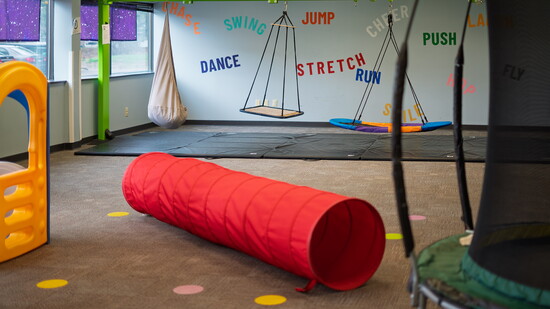
Play is at the heart of that process. Therapy sessions often look like games, laughter, and time spent on the floor.
“People sometimes underestimate how much learning happens through play,” Camille said. “But it’s where so much growth begins.”
The team also works closely with families to rebuild parts of life that may have been put on hold. Parents are often asked a simple but powerful question: What have you stopped doing? From there, the focus becomes helping them return to those moments, whether that means family outings, shared meals, or everyday routines.
As children grow older, MN Behavioral Specialists supports their transition into school settings, working alongside educators to help create a path forward.
A Community of Support
MN Behavioral Specialists is about partnership. It is about walking alongside families during some of their most uncertain moments and celebrating milestones that may have once felt impossible.
“We’re just one part of their journey,” Paige said. “Our goal is that by the time they leave our program, both the child and the family feel ready for what comes next.”
For families who have concerns or simply want to learn more, reaching out can be the first step toward understanding what support might look like.
To learn more about MN Behavioral Specialists or to connect with their team, visit their website at https://www.mnbehavioral.com/ and start the conversation.
We meet children where they are, helping them build the skills they need today so they can move forward with greater independence tomorrow.”
We aim to build the foundational skills they need to learn within a school environment, so they can become more independent and require less support over time.