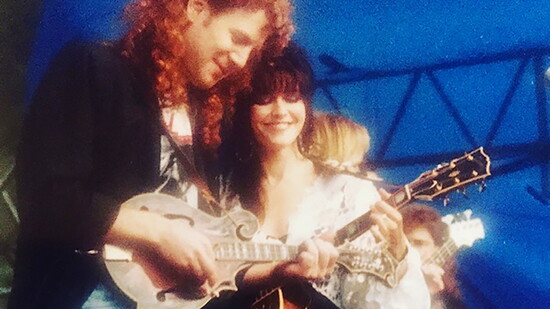
Before the awards, the hit songs and a place in the Canadian Country Music Hall of Fame, there was a house in Montreal where the door was open, the music was playing and, on any given Friday or Saturday night, someone might arrive carrying an instrument.
For Patricia Conroy, that was where it all began.
“We didn’t have a lot,” Conroy remembers. “But we had music.”
Her father, an Irish immigrant who spoke Gaelic fluently, fiercely preserved the culture of his homeland, helping bring Montreal’s Irish community together through music and gatherings. Her mother played guitar and loved traditional country artists like Hank Snow.
Somewhere between the two, Conroy found her sound.
“My dad loved Irish music, and my mom loved country music, so we blended the two together,” she says.
“We were the party house in Montreal. People were always welcome on a Friday or Saturday night - bring an instrument, bring something to eat.”
Her father would even bring accomplished musicians and singers from Ireland to Montreal for concerts, with those who stayed afterward often ending up at the Conroy home.
Those nights gave Conroy more than an education in music. They taught her something that would eventually become a through line in her life and career: music creates community.
“I know it’s just music, but music means love. It means neighbors. It means a lot of things.”
Her father reinforced that lesson outside their home, too. Every Christmas and New Year’s Eve, the family performed for veterans at a local hospital.
“The way he brought community together - I found that in country music as I grew up,” she says. “That was one big lesson I learned: connect with people. We have so much in common, especially through music.”
That foundation would eventually carry Conroy far beyond Montreal. After launching her career on Canada’s West Coast, playing bars six nights a week, Conroy won a Battle of the Bands competition - and $10,000 in studio time. She recorded several songs, made cassette copies with a photocopied picture tucked inside and saved enough money to attend her first Canadian Country Music Awards.
She knew virtually no one. Then she stepped into an elevator.
A man introduced himself as Bob Roper. When he learned Conroy was a singer and sometimes wrote her own songs, he asked if she had any music. She did.
“I had a cassette tape, so I gave it to him,” she recalls.
Roper worked with Warner Music Canada. A few weeks later, while Conroy was playing a bar in British Columbia, the phone rang.
“He said, ‘I don’t know if you’re ready for this, but we’re going to sign you and record you.’”
Conroy waited until she hung up before jumping into the air.
It was the beginning of a career that would make her one of Canadian country music’s most enduring voices. Conroy earned multiple Canadian Country Music Association Awards, including Female Artist of the Year and Album of the Year, and was inducted into the Canadian Country Music Hall of Fame. As a songwriter, her music found homes with other artists, including Reba McEntire, Trisha Yearwood, Lady A, Kenny Rogers, and more.
And yet, when Conroy talks about what she is most grateful for, the conversation continually returns to people.
Her longtime band became family. Her husband, Bob Funk, whom she first spotted playing guitar at a festival, has been beside her through decades of music and life. Fellow artists (especially the women in her life, who continually inspired and supported her) became lifelong friends. When Conroy eventually stepped away from constant touring and focused more heavily on songwriting, she found fulfillment in helping younger artists tell their stories.
“I didn’t go away when I stopped touring and became a writer full time,” she says. “I simply channeled it through the young artists.”
Today, after decades in music, Conroy is performing again - and still approaching the next chapter with the same gratitude that began around those crowded nights in Montreal.
“I’m so happy that at this time of my life, I’m still physically able,” she says. “I still have my voice. I still have the desire. I still have the creative brain. I still look for opportunity.”
Maybe that is Conroy’s story in its simplest form: a life spent following music wherever it leads, while never forgetting what her father taught her at the very beginning.
See people. Bring them together. And always leave room for one more at the party.
“I’m so happy that at this time of my life... I still have my voice. I still have the desire. I still have the creative brain. I still look for opportunity.”