When asked where it all started, Sherry tells of a friend who returned from France bearing three small gifts: drawings, torn and framed. Fragments and yet whole in themselves, and something in Sherry's chest cracked open. Not a slow appreciation. A bolt of lightning. This was roughly 30 years ago.
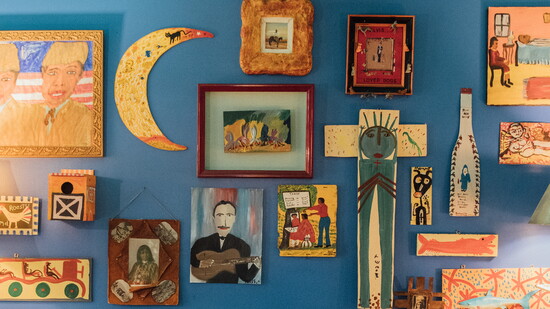
Sherry and her husband Scott Tracy have spent decades assembling one of the most compelling outsider art collections in Colorado, a living environment that functions less like a gallery and more like a permission slip. Their Denver home is layered, intentional, and electric with creative energy, every wall and surface a conversation between objects collected from the American South, London galleries, New York auction houses, and from the front porches and working studios of the artists themselves.
Originally from Kansas City, the couple relocated to Colorado about 35 years ago, spending time in Colorado Springs before landing in Denver. Sherry had always wanted beauty reflected in every corner of her life, and Denver, with its particular cultural openness, felt right. Sherry has a keen eye for what she likes. Not formally trained but wildly creative as both an artist and a curator, she has made a life of creating and collecting from a deep well of inner inspiration, not from the dictates of the world.
"Outsider art" is a broad and sometimes contested term, but at its heart it describes work made outside the mainstream art world: self-taught artists, visionary painters, sculptors working in isolation or from spiritual compulsion, many of them black artists from the rural South who were doing their own thing, unconcerned with collectors or critics or market trends. That authenticity is precisely what drew Sherry in.
She and Scott traveled, and they traveled strategically. The South first, where so much of this tradition is rooted. Then, in England, London, researching artists before trips so visits could be arranged to studios in advance. New York through auction when necessary, but always preferring the direct path- going to the source, meeting the makers, sitting with them in their spaces.
Look around their home, and the collection tells its own story: cacophonous, tender, disturbing, and transcendent all at once. A lamp fashioned entirely from popsicle sticks. A desk carved with breathtaking intricacy, outdoor scenes etched inch by inch by an inmate at a prison outside Colorado Springs, time and obsession made visible in wood. Milagros and wooden effigies hang alongside ceramic poodles wearing collars of cotton-candy pink. Ghostly faces emerge from root balls, as if the forest itself grew a soul. Alligators assembled from rubber sit atop tables bedecked with pennies and peanut shells. Delight and devastation. Perversion and religion. It is for all its unapologetic individuality, also entirely coherent.
Collecting outsider art, Sherry will tell you, demands a different posture than traditional collecting. Yes, knowledge matters, but instinct matters more. The gut knows.
As a self-taught artist working across multiple mediums from a studio in her home, Sherry’s connection to outsider art is not incidental; it is deeply personal. As a child, she received the message that art wasn't valuable, that without formal training, it wasn't "real." The outsider artists she has spent a lifetime collecting gave her something back: proof that creative freedom isn't granted by a degree. You make the work. That's the credential.
An avid thrifter, she still gets a rush from the hunt, the find, the moment something extraordinary turns up in an unexpected place. The thrill hasn't dimmed.
And every morning, surrounded by thirty years of bold, raw, visionary work, Sherry Kass looks around at what she and Scott have built and feels exactly what she felt when those first drawings arrived from France.