It's difficult to impress a 15-year-old. But when Mayor Laura Kropp and her youngest child pulled up to Black Cat Coffee on a recent Saturday, even her teenage daughter noticed something had shifted in Mount Clemens.
The parking was tight. People were walking downtown, filling the sidewalks, ducking into shops.
Her daughter turned to her and said simply: "Hey, mom. It's working."
After decades of stagnation, after years of watching other communities thrive while Mount Clemens treaded water, after COVID-19 seemed poised to deliver a final blow—it's working.
And if you're thinking about making Mount Clemens your home, this is the moment to pay attention.
"I feel like it's always been a great place to live," says City Manager Gregg Shipman, who's been with the city since 1996. "We were always a hidden gem. But now, people are realizing it."
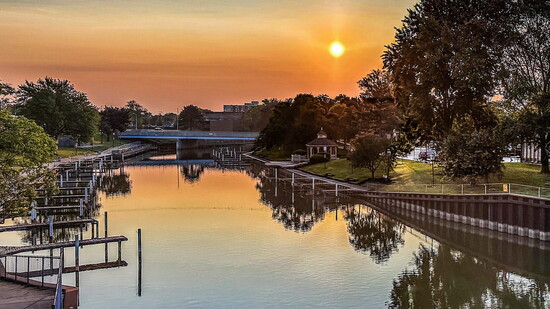
What they're realizing is a city with small-town charm and big-city vibe. A place where no two houses look alike, because the housing stock spans 200 years of architectural history. Where you can find a gorgeous Victorian fixer-upper, a solid starter home, or a million-dollar property on the Clinton River. Where the downtown sits at the county seat, walkable and historic, with tree-lined streets that in fall look like, as Shipman puts it, “postcards.”
And crucially, where prices remain affordable—for now.
Mount Clemens saw the second-highest percentage increase in property values in Macomb County recently. Translation: the secret's getting out. People are buying in. And the window for getting in for a good price is closing.
"The time is now,” Shipman says, “while you can still get it while it's affordable."
When Kropp took office six years ago, the outside perception of Mount Clemens was bleak: a dying community, stagnant, past its prime. But Kropp, who ran for mayor precisely because she saw Mount Clemens sitting on untapped potential, refused that narrative.
"So many of us who lived here felt it," she says. "We had this hidden potential, this greatness waiting."
Kropp and her team started small: a city flag. A mascot. Rebranding the city trucks. Little things that added up to, as Kropp puts it, “one percent better every day—that’s 365 percent better by the end of a year.”
Then they started tackling the big things.
"Big ships turn slowly,” Shipman points out. “But once you get them moving, it's hard to stop them. We've turned this ship, and now it's gaining momentum fast. If people don't get on board, they're going to get left behind."
Kropp's State of the City theme last year? The Awakening. Because that's exactly what's happening. Walk through downtown Mount Clemens today and you'll see construction everywhere. That signals rebirth, not decay.
The Macomb Place revitalization is the crown jewel. Forty years had passed since anyone had seriously reinvested in the heart of downtown. Curbs stood 12 to 14 inches high. Pavers were collapsing. The fountain was falling apart.
The fix started with a $12,000 rendering of what Cherry Street Mall could become. That sketch unlocked an $800,000 grant from the Michigan Economic Development Corporation. Then Congressman John James secured $3.5 million in federal funding. The DDA chipped in $200,000. The city added over a million of its own funds.
What began as a modest facelift became a $6 million transformation.
"We eliminated curbs and went with a plaza style to make it more walkable," Shipman explains. "We kept the historic charm but brought in that vibrant, modern feel. People are already complimenting it… and it won't even be finished until May."
The project also includes a new Cherry Street parking lot and infrastructure improvements on Main Street, all designed to make downtown more connected, more walkable, more alive.
And it's working. When Kropp became mayor, downtown was 30 percent occupied. Today, it's closer to 80 percent. And that's after COVID, when everyone expected Mount Clemens to collapse.
Perhaps no decision signals Mount Clemens' boldness more than moving City Hall and the Fire Department off the riverfront.
Both buildings were falling apart. Feasibility studies showed it was cheaper to build new facilities than repair them. So the city made the call: relocate to downtown (bringing more foot traffic to Main Street) and open up prime riverfront land for redevelopment.
A $2 million state grant sponsored by State Representative Denise Mentzer helped purchase the old Oakland University building for the new City Hall. As for the riverfront property? The commission will decide, but expect a mix of parks, public space, and possibly market-rate apartments or condos—all within walking distance of a revitalized downtown.
"We're not thinking five years ahead," Shipman says. "We're thinking generationally, about what happens when we're not here."
It's a decisive bet on the future.
Here’s a future project you likely haven't heard yet: Shipman tells me Mount Clemens just secured state TIP funding to transform North and South Main Street.
North Main will become a tree-lined boulevard, with a landscaped median, enhanced pedestrian crossings, and bike lanes. Those bike lanes will run all the way down South Main, connecting to the Clinton Spillway trail at Shadyside Park. You'll be able to bike from downtown Mount Clemens all the way to the lake, or jump on the 16 Mile trail into Sterling Heights.
"It's going to be sidewalk, bikes, parallel parking, traffic, then the boulevard," Shipman explains. "The parked cars will protect the cyclists. People gave us feedback at the public forum, and it's a great design.”
The project's tentatively slated for 2027. Add it to the list of reasons to buy now, before everyone else catches on.
The city’s also brought back the Parks and Recreation Department, which had been cut over 20 years ago. Programming now serves kids, seniors, and everyone in between. And there’s free kayaking on the Clinton River.
"When you want to attract people, especially younger families, you need recreation," Shipman says. "We've got a lot of parks. Now we've got the programming to match."
Then there’s the housing stock: no cookie-cutter subdivisions. Every house has personality: different eras, different styles, different stories.
Kropp and her husband bought their century-old home in 2009 during the recession. It had been vacant for a year and a half. Water poured through the ceiling from a burst pipe. But it had gorgeous bones: Pewabic tile, molded plaster, leaded glass French doors.
Her cabinetmaker husband gutted the kitchen and transformed it into a warm, modern space that still feels like it belongs in a 1925 home.
Speaking of the time it was built, Kropp tells me that hidden behind the powder room wall was a concealed compartment with a bottle of Grant's Scotch—complete with a liquor control commission seal. They think the original owners stashed their hooch there during Prohibition, accessible through a false back that connected to a linen closet drawer.
"There's always a bottle of Grant's in our house now," Kropp laughs. "Not great scotch, but it's part of the story."
That's the Mount Clemens experience: history you can touch, homes you can make your own, neighborhoods where people still sit on their porches and get to know each other.
And right now, it's still affordable. Starter homes for young families. Historic fixer-uppers for the adventurous. Riverfront properties for those ready to invest. Apartments at the Victory Inn site: 120 market-rate units opening soon, within walking distance of everything downtown has to offer.
"We've got opportunity for that starter family, for the retired couple looking to downsize, for the family looking to upsize," Shipman says. "We really do have something for everyone."
No city transforms without facing hard truths. Almost half of Mount Clemens land is non-taxable: county buildings, nonprofits, hospitals, churches.
"We're essentially operating on half the budget a city would normally collect," Kropp explains.
Then there’s the public school situation, which the new superintendent is working hard to turn around. "The schools keep me up at night," Kropp admits—she taught special education for 13 years before becoming mayor. "But I'm hopeful the new administration can rebuild confidence."
Kropp makes $3,500 a year as mayor. It's a ceremonial position, according to the city charter. She spends far more time on it than that salary reflects. And that’s time away from her young family, from her family business.
But it's a legacy, she says. So she's making sure her efforts matter.
"People are looking for connection again," she says. "And that's what we offer.”
Connection still means something around here. Kropp loves her Saturday mornings at Black Cat, or Clementine’s or Buchanan's Bistro. At all three, they know her by name.
“Small-town feel, big-city vibe,” she says. “There’s room for you here. You can find your places, your space and your people. It's not a closed-off community."
Shipman's been with Mount Clemens since 1996. He's lived through near-bankruptcy, budget crises, the loss of the city's police department—moments when an emergency financial manager seemed inevitable. But he never lost his belief in Mount Clemens—or his determination to be part of its rise.
He tells a story from his school days: a math teacher asked students to find the most powerful equation. While other kids calculated pi, Shipman wrote a big "1" on his paper.
The teacher didn't get it. But Shipman explained: George Washington. Martin Luther King Jr. Rosa Parks. When one person gets others to believe, one becomes two, becomes three, becomes a hundred.
"In this case,” he says, “the one person was Laura. She made everyone believe we could make the impossible happen. Soon the one became the many. Now we're not one standing alone anymore—we're a team to be reckoned with."
Kropp deflects, crediting Shipman's 30 years of institutional knowledge, and his willingness to embrace change despite watching decades of stagnation. Shipman, in turn, says he's been blessed to work with commissioners, business owners, and residents who would not accept failure. "We could never have turned the ship without teamwork from everyone,” he says.
So between Kropp and Shipman, the commissioners, the business owners, and the residents who believed: now it's working.
"We've turned Mount Clemens from the culture of 'no' to 'watch us,'" Kropp says.
Watch us revitalize downtown. Watch us transform the riverfront. Watch us connect our trails and build our boulevards. Watch us create the kind of place people want to call home.
"We haven't reached our potential yet," Shipman adds. "We're on the uptick. But getting there is one thing; staying there is another. We're committed to sustainability. We're thinking generationally."
The narrative has changed. The momentum is real. And the people who move to Mount Clemens now are buying into a city that's awake again, and reclaiming its place as the jewel of Macomb County.
Buy low. Get in while the getting's good.
Because that 15-year-old was right.
It's working.
"We've turned Mount Clemens from the culture of 'no' to 'watch us.'" — Mayor Laura Kropp