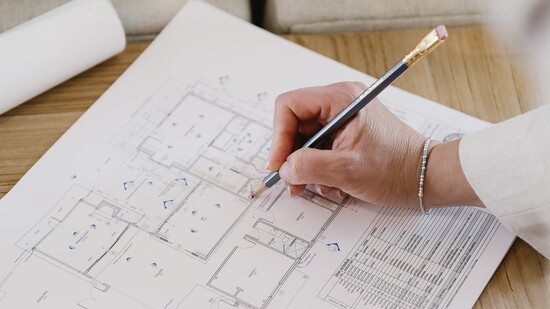
In the rolling landscape of the Texas Hill Country, homes are more than structures; they are a reflection of how people live, gather, and grow. For local architect Kate Tart, designing homes is both a responsibility and a privilege, rooted in a deep belief that design has the power to meaningfully improve everyday life.
“We spend the majority of our lives inside a building,” she says. “The design of those places has a big impact on the quality of our lives.” While her experience spans schools, churches, and office buildings, it’s residential architecture that resonates most. “Designing someone’s home is not just the most fun, it’s also the most rewarding. It’s all about the people.”
That people-first mindset is central to Tart’s work. She takes time to understand how her clients move through their day, what brings them joy, and the challenges they face in their current space. “If you listen carefully,” she explains, “you start to see a home that provides the space for a quiet cup of coffee at sunrise as well as a space where the teenagers hang out. For me, accessible design isn’t just about responding to different needs—it’s about making thoughtful design attainable for everyone.”
Tart’s connection to the area runs deep. She moved to Austin to attend graduate school at the University of Texas and quickly fell in love with the region. Eight years ago, she and her family chose Dripping Springs as home. “This is where we wanted our kids to grow up,” she says. “I love being of service to my community.”
Designing in the Hill Country comes with both inspiration and responsibility. The rugged beauty of the landscape, paired with our intense climate, demands thoughtful consideration. “Are there views we want to capture? We need to consider the southern and western sun, which provide a lot of heat gain,” Tart explains. Deep overhangs, shaded porches, and strategic orientation all play a role in creating homes that are comfortable and efficient.
Equally important is how homeowners use all of their space, especially the outdoors. “The design doesn’t stop at the exterior walls,” she says. Outdoor kitchens, porches, patios, and pavilions become extensions of the home.
At the heart of Tart’s philosophy is a simple idea: Design matters. It’s something people often don’t notice until it’s missing. She compares it to something as familiar as a staircase.
“We rarely think about stairs when we are using them. However, if the stairs are uneven you’ll trip and quickly recognize they don’t work well,” she says. The same principle applies to a home’s layout. A crowded kitchen, a lack of quiet space, or awkward flow can subtly but significantly impact daily life. “Thoughtful design for your home is like a watch,” she says. “It should function seamlessly for the way you live, while reflecting your personal style.”
Despite the value architects bring, many homeowners hesitate to engage one, often assuming it’s out of reach. Tart works to change that perception by making the process approachable and transparent. “Most people only build a home once, so it’s completely normal to feel intimidated,” she says. “Your architect should be your guide from design until you move into your house.”
She often incorporates features that allow homes to evolve with their owners over time, like main-floor bedrooms, accessible bathrooms, or structural planning for future additions like elevators. “Yes, I want to design a house that works for you now, but I also want a house that works for you for years to come,” she says.
Her work ranges from young families to multigenerational living, where flexibility is key. Sometimes that means rethinking a space entirely, like designing bunkrooms that encourage connection or creating multi-use areas that adapt as needs change.
Renovations, too, play an important role in her business. While they can come with unknowns, Tart sees them as an opportunity. “Renovating an existing house is one of the most sustainable approaches to design because we are utilizing what is already there instead of starting from scratch,” she explains.
Among her many projects, one stands out as especially meaningful: a renovation for family friends caring for a daughter with special needs. By reconfiguring the home to include a large, accessible bathroom and a seamless path through the house, Tart helped ease the physical burden of daily care. “It wasn’t the fanciest project,” she says, “but it had the biggest impact and was most rewarding for me.”
For those considering building or renovating, her advice is straightforward: Start the conversation. “I love meeting with potential clients to help them envision what is possible,” she says.
In a region where landscape, lifestyle, and community are deeply intertwined, thoughtful design doesn’t just shape a home. It shapes a life.
KateTart.com | @katetartarch