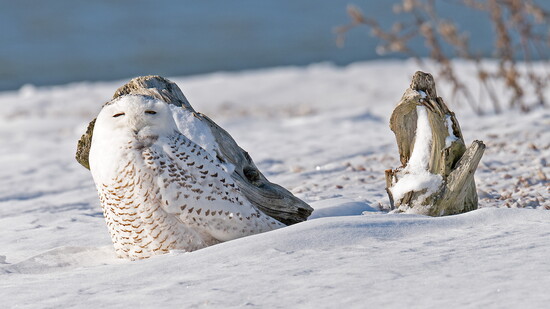
On a winter morning at Milford Point, the Coastal Center building stands sentinel between two worlds: the vast salt marsh stretching inland and Long Island Sound opening to the south. The observation tower offers sweeping views of this picturesque landscape, where osprey platforms dot the wetlands and the winter grasses paint the marsh in muted golds and browns. While many of the 315 bird species recorded here are migratory—absent during the colder months—dedicated birders still find winter residents and stragglers among the reeds and shoreline. It's a landscape full of promise, a place of quiet beauty even in the off-season. This is Connecticut Audubon Society's Coastal Center at Milford Point, and according to those who know it best, it's one of Milford's best-kept secrets.
A Legacy Born from Determination
The story of Connecticut Audubon begins not in Milford, but in Fairfield in 1898, when a small group of determined women gathered at the home of Helen Wardwell Glover. Led by Mabel Osgood Wright, a pioneering conservationist and prolific author, these women were alarmed by the wholesale slaughter of birds-providing feathers for women's hats. It was an era when seeing a Snowy Egret's plumage on a hat was far more common than spotting one in Connecticut's marshes.
Wright and her fellow founders—including Helen Glover, Harriet Glover, Theodora Wheeler, and others—formed the Connecticut Audubon Society as part of a nationwide movement. Within weeks, they had expanded their vision beyond Fairfield County to serve the entire state. Wright, elected president by acclamation, would lead the organization for the next 26 years until 1924.
Connecticut Audubon has remained independent of the National Audubon Society since its founding—a distinction it shares with Massachusetts Audubon. Today, the organization operates six five nature centers and manages 22 wildlife sanctuaries throughout Connecticut, protecting over 3,400 acres of open space.
Establishing a Coastal Haven
The Milford Point Coastal Center represents Connecticut Audubon's commitment to protecting Long Island Sound's vital ecosystems. In 1986, the organization entered into a long-term agreement to serve as stewards of the 8.4-acre Smith-Hubbell Wildlife Refuge and Bird Sanctuary. The Coastal Center building was constructed on the site of the former Smith Hotel and dedicated in 1995, providing a base for education, research, and conservation adjacent to the 840-acre Charles Wheeler Salt Marsh and Wildlife Management Area at the mouth of the Housatonic River.
In 2002, Milford Point was designated an Audubon Important Bird Area, recognizing its critical role as habitat for migrating and nesting birds. The site's diverse ecosystems—including tidal salt marshes, barrier beaches, tide pools, and coastal dunes—create a mosaic of habitats that support an extraordinary variety of wildlife.
Today: A Hub of Discovery and Learning
Step inside the Coastal Center on any given day and you'll find a vibrant hub of activity. Center Manager Matt Joyce leads a dedicated team—small in number but enormous in impact—supported by an army of passionate volunteers. "We couldn't run this center without volunteers," says Bboard member Cliff Schorr, who himself started as a docent. "They're here because they love it."
The center's summer camps are wildly popular, with the parking lot filling by 9 a.m. as parents drop off children eager for a day of marsh exploration, tide pool investigations, and hands-on environmental education. The camp provides accessible nature education that creates lasting connections to the coastal environment. Throughout the year, the center also offers school programs, birthday parties, scout programs, and guided bird walks led by experienced naturalists.
For George Amato, Chairman of the Coastal Center Board, this place represents a full-circle journey. A Milford native who grew up in Morningside, Amato spent his career as a biologist at the New York Zoological Society (now the Wildlife Conservation Society) and the American Museum of Natural History, studying wildlife around the world. After 37 years working globally, he realized during the pandemic that Milford Point "is as significant and important as any of the millions of other places I've worked in Cuba or Central Africa or South America."
"I grew up in Milford. I was just some kid," Amato reflects. "I played in the tidal pools in front of my house. For me, it just became this passion to share with my neighbors how lucky we are to have this incredible place."
The center welcomes visitors of all experience levels—from novice birders seeking a peaceful escape to expert ornithologists using the eBird app to document rare species. When unusual birds appear, word spreads quickly through the birding community, and the parking lot fills with enthusiasts. The pandemic significantly increased visitation as people sought outdoor spaces, discovering this coastal gem many had somehow missed despite living nearby.
"We call it Milford's best kept secret," says Schorr. "We get people from Milford here all the time, and they come in and they say, 'I never knew this place existed.'"
The site's accessibility is part of its appeal. Unlike other Milford beaches that require resident stickers, the Coastal Center's trails and observation areas are free and open to the public from dawn to dusk. Anglers fish the productive waters at all hours following the tides, families explore the boardwalk and climb the 70-foot observation tower, and birders scan the marshes for the bald eagles that now appear daily—a sight that would have been impossible in the recent past, before DDT was banned.
Looking Forward: Conservation and Community
The center stands at an exciting crossroads. Recently, Connecticut Audubon received a transformative $750,000 federal appropriation grant secured by Congresswoman Rosa DeLauro, enabling significant improvements to the facility. Additional support from the Community Foundation for Greater New Haven funds bird conservation work. The organization has also recently taken over management of Stratford Point across the river, creating complementary conservation areas along both sides of the Housatonic River mouth.
One of the organization’s center's most significant initiatives is Osprey Nation, a volunteer-based monitoring program tracking approximately 600 osprey nests across Connecticut. The osprey's remarkable comeback from near-extinction serves as a powerful conservation success story. As Amato notes, when he was growing up in Milford, there were no ospreys or bald eagles—DDT had decimated their populations through eggshell thinning. Today, these magnificent predators thrive, thanks to the 1972 DDT ban and decades of restoration work.
"The return of this species to this part of the country is really an amazing story," says Amato. "If you can mitigate something, like in this case the toxin, you can really restore. Things aren't always gone forever."
Looking ahead, Connecticut Audubon plans to expand osprey monitoring with prey-based studies, examining the relationship between fish populations and osprey success. This research connects directly to broader ecosystem health and even human wellbeing—a theme that dates back to Rachel Carson's 1962 book Silent Spring, which first articulated how environmental indicators affect human health.
The center is also reviving its annual "Return of the Osprey" fundraising event on April 25th and will host David GessnerAlan Poole, author of the definitive book on osprey conservation, for a reading on June 6th. These programs aim to connect broader audiences with the center's mission while celebrating conservation victories.
For the volunteers, staff, and board members who dedicate themselves to this place, the center represents something essential: "Places where you have a slice of wilderness are really, really important to people," Matt explains. "Something like this that is nestled within a bit of an urban mosaic—somewhere like Connecticut where there's urban tendrils reaching everywhere—that is this well-protected, that has this many different habitat types sitting adjacent to one another, I think that's very important."
The Connecticut Audubon Society's Coastal Center at Milford Point welcomes visitors Tuesday through Friday from 10 a.m. to 4 p.m., Saturdays from 10 a.m. to 1 p.m., and Sundays from noon to 4 p.m. The Smith-Hubbell Wildlife Refuge trails are open daily from dawn to dusk. Whether you're seeking tranquility, hoping to spot your first bald eagle, or introducing children to the wonders of coastal ecosystems, this Milford treasure awaits discovery. As Schorr says simply: "It's a very peaceful, tranquil place. It's really a jewel."
"Something like this that is nestled within a bit of an urban mosaic...that is this well-protected, that has this many different habitat types...I think that's very important."