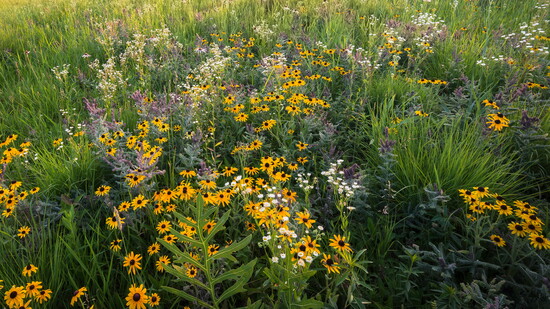
There is a particular kind of quiet that happens when you push your hands into soil. Not the absence of sound as the birds are still singing, the breeze is still blowing, but a settling. A coming home to yourself that is hard to find anywhere else.
Boulder people understand this intuitively. We are hikers and meditators and farmers market devotees (Saturday Market is now open!) We talk about connection to the natural world the way other cities talk about traffic. And yet, many of us have outsourced our relationship with growing things: to CSA boxes, to Whole Foods, to the farmers we love but don’t become. Gardening asks us to close that distance. And when we do, something shifts. You can start simple; just a few seeds.
The mental health research on this is now substantial. Time spent gardening measurably reduces cortisol, the body’s primary stress hormone. Studies have linked regular gardening to lower rates of anxiety and depression, improved attention, and even reduced risk of dementia. Researchers in the Netherlands found that gardening outperformed reading as a stress recovery activity. There is something about working with living systems that soothes the soul. (But still love a good book!)
The spiritual dimension is harder to quantify, and perhaps more important. A garden operates on its own time. Seeds germinate when they’re ready. The squash will do what squash does, regardless of your deadline or your mood. This is either deeply frustrating or liberating, depending on how tightly you’re gripping the rest of your life. For most of us, gardening is the place we finally practice the letting go we’ve been meaning to do and trust the timeless, natural process.
There is also the matter of reciprocity. You tend something. You give it water, compost, and your attention. It gives back. In a culture that often reduces well-being to what we consume, the garden insists that we are also makers. Also nourishers. That capacity to give care, and to receive its fruits, is healing.
The garden does make the web of life impossible to ignore. The earthworm aerating your soil, the bee visiting your borage, the mycelial network threading invisibly beneath your feet. You are not separate from any of it. You never were.
This May, as the Front Range softens into spring and the farmers' markets return and the light turns that particular gold it only hits in Colorado, consider getting your hands dirty. Not to optimize anything. Not to produce. Just to remember that you are a creature of this earth, subject to its seasons, held by its soil, and that there is grace in that belonging.
If you are looking for a place to start, Growing Gardens offers community plots at their Hawthorn gardens. Learn more by visiting GrowingGardens.org/CommunityGardens.