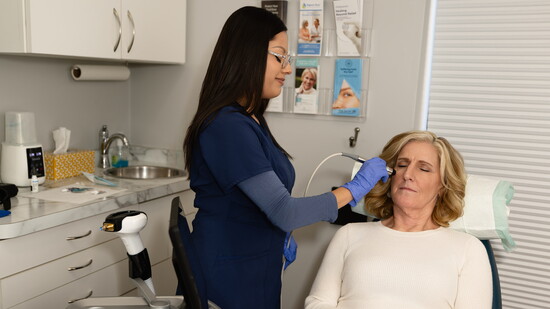
Dry, irritated eyes are easy to dismiss. Something to blame on screen time, aging, or a long day. But for many patients, dry eye is not a fleeting discomfort; it’s a chronic, often misunderstood condition that can significantly impact vision, comfort, and daily life. At Family Eye Care Clinic in Woodstock and Lake Geneva, Dr. Jessica Heinke has built much of her practice around treating dry eye, seeing firsthand how frequently it goes undiagnosed or undertreated. Through education, careful diagnosis, and personalized treatment, she is helping patients understand that dry eye isn’t something to simply live with but something that can be managed.
Why Dr. Jessica Heinke Wants Patients to Take This Common Condition Seriously
Dry eye is often dismissed as a minor inconvenience and something to be managed with over-the-counter drops or chalked up to too much screen time. But for Dr. Jessica Heinke, dry eye is anything but simple. It is a complex, chronic medical condition that can quietly erode quality of life and, when left untreated, lead to serious long-term consequences.
Dr. Heinke is the seventh optometrist in her family, continuing a legacy of eye care that spans generations. She began her career working in her father’s practice in South Carolina before relocating to Illinois, where she and her husband have family. In 2007, she opened her own practice in Woodstock, followed by a second location in Lake Geneva in 2008. Over time, her clinical focus narrowed to an area which found her, she says, rather than the other way around: dry eye disease.
“I was seeing so many cases early in my career,” she explains. “At the time, there wasn’t much research and very few treatment options. Patients were struggling, and we didn’t yet have the tools we needed to help them.”
As research expanded and new therapies emerged, Dr. Heinke began to see firsthand how life-changing proper dry eye treatment could be. That experience fueled her passion, leading her to conduct her own research and publish articles on the condition. Today, dry eye is the cornerstone of her practice.
Q: Dry eye is often brushed off as a minor annoyance. Why is it actually a much more serious condition?
Dr. Heinke: Dry eye is a chronic inflammatory disease of the ocular surface, not just a lack of moisture. It involves dysfunction of the oil glands in the eyelids, inflammation of the surface of the eye, or inadequate tear production and most often, a combination. Because it’s chronic and progressive, it can lead to persistent discomfort, blurred vision, and a significant impact on daily life if it’s not properly treated.
Q: Why do so many people misunderstand or minimize dry eye?
Dr. Heinke: One of the biggest misconceptions is that a bottle of eye drops should fix it. People think dry eye just means their eyes feel dry, when in reality it’s a problem with how the tear film functions. Healthy tears require oil, water, and mucin working together. When one part fails, the whole system becomes unstable.
Dry eye is also very common, so people assume it’s “normal”, just part of aging, screen use, or the environment. Many are surprised to learn that watery eyes, blurry vision, or eye fatigue can all be signs of dry eye. Over-the-counter drops may offer temporary relief, but they don’t address underlying inflammation or gland dysfunction, which is why so many patients struggle for years without real improvement.
Q: When should someone recognize that their symptoms are no longer “normal” and seek professional care?
Dr. Heinke: If symptoms are persistent, worsening, or interfering with daily activities like work, reading, screen use, or if someone feels dependent on eye drops just to get through the day, that’s a sign it’s time to be evaluated.
Q: Why is dry eye often chronic, and why don’t eye drops solve the problem?
Dr. Heinke: Dry eye is driven by ongoing inflammation and gland dysfunction. Artificial tears can add moisture, but they don’t fix blocked oil glands, inflammation, or reduced tear production. Without addressing the cause, the cycle continues.
Q: How do you diagnose dry eye beyond a standard eye exam?
Dr. Heinke: Diagnosis drives treatment. We evaluate oil gland structure and function, tear quality and stability, signs of inflammation, tear production, corneal nerve and cell damage, exposure issues, and lifestyle factors. Many patients have more than one type of dry eye, which is why a personalized treatment plan is so important. The wrong treatment for the wrong type simply won’t work.
Q: How does dry eye affect quality of life when it’s not well managed?
Dr. Heinke: Dry eye can quietly erode quality of life. Patients describe difficulty reading, avoiding night driving, struggling with screen use, and constant distraction from discomfort. It affects productivity, mood, and confidence. When your eyes are uncomfortable, everything feels harder.
Q: Why is it important to look beyond the eyes themselves?
Dr. Heinke: Eyes can tell a lot of stories about what’s happening with a person’s overall health. Autoimmune diseases, hormonal changes—especially around menopause—medications like antidepressants or antihistamines, and systemic inflammation can all contribute to dry eye. As optometrists, we can also detect unrelated health issues such as autoimmune disorders or even brain tumors during an eye exam.
Q: If you could change how people think about dry eye, what would you want them to understand?
Dr. Heinke: I want people, patients and providers, to understand that dry eye is a real, progressive medical condition. Persistent symptoms shouldn’t be ignored or delayed. Early evaluation and treatment make a tremendous difference. When dry eye is addressed early, it’s often easier, more effective, and far less expensive to manage. Waiting until symptoms are severe limits treatment options and long-term outcomes.
As both a clinician and a mother of two adult children, Dr. Heinke approaches her work with empathy and urgency. Her message is clear but hopeful: dry eye is common, but suffering doesn’t have to be. With early diagnosis, personalized care, and growing treatment options, relief is finally possible.
One of the biggest misconceptions is that a bottle of eye drops should fix it. People think dry eye just means their eyes feel dry.
Early evaluation and treatment make a tremendous difference. When dry eye is addressed early, it’s often easier, more effective, and far less expensive to manage. Waiting until symptoms are severe limits treatment options and long-term outcomes.