For many homeowners in Austin and the surrounding Hill Country, building a pool is about far more than simply adding water to the backyard. The most successful projects begin with a different question altogether: how will this space actually be used?
A swimming pool can serve many roles. For some homeowners it becomes a quiet retreat from the pace of daily life. For others it becomes the center of gatherings with friends and family. And for families with young children, it often evolves into the place where summers are spent and memories are made.
Understanding that lifestyle is where good design begins.
Understanding How the Space Will Be Used
The first conversation with a homeowner rarely starts with shape or features. Instead, it centers around how they envision spending time in the space.
Is the backyard meant for a small family that enjoys quiet evenings? A large family that hosts gatherings every weekend? Or perhaps a home designed for entertaining friends regularly?
Those answers determine nearly everything that follows. The flow of the space, the layout of seating areas, and even the depth of the pool all change depending on how the homeowner plans to live with it.
A pool designed for entertaining, for example, must consider how people move through the environment. Where will guests gather to talk? Is there enough seating? Can people comfortably stand or walk through portions of the pool while socializing?
Designing for lifestyle creates a pool that feels natural to use.
Getting the Size Right
One of the most common challenges homeowners face is understanding the true scale of a pool design.
Measurements such as perimeter footage or square footage can feel abstract until they are placed within a real backyard. A 120-foot perimeter pool may feel expansive in one design and relatively modest in another depending on shape, depth, and surrounding features.
Some homeowners initially imagine something far larger than they need, while others underestimate how much space is required for the experience they want.
The goal is not simply building bigger or smaller—it’s finding the proportions that best support the way the pool will be used.
Designing for Different Lifestyles
Different households require very different design strategies.
Homes that frequently host guests often benefit from layouts that prioritize circulation and social areas. Wide steps that double as seating, shallow areas where people can comfortably stand, and nearby gathering spaces allow the pool to function as part of the overall entertaining environment.
Families with younger children typically need something different. A generous beach entry or tanning ledge creates a shallow play area where kids can spend hours safely. Oversized steps often become informal play zones as well. At the same time, adding elements such as a jump rock, waterfall, or grotto gives children something exciting to grow into as they get older.
For homeowners seeking a more private retreat, design often shifts toward creating atmosphere. Water features that produce a soft, natural sound—similar to a babbling brook—can transform the backyard into a peaceful escape. Strategic layout and landscaping can also create a sense of separation from the outside world, allowing the space to feel more secluded and personal.
Letting the Property Guide the Design
Every property offers its own opportunities.
One of the first things to evaluate is elevation and view. Changes in grade can create opportunities for dramatic design elements, while thoughtful layout can redirect attention away from less desirable views.
Accessibility is equally important. A beautiful pool that feels disconnected from the home rarely functions as well as one that integrates naturally with the flow of the property.
The goal is to position the pool so that it feels like an extension of the home rather than a feature placed into the yard after the fact.
The Details That Define Luxury
In many ways, luxury pool design is defined by the details.
Clean, perfectly aligned tile and grout lines may seem subtle, but they dramatically affect how polished a finished pool appears. Surface materials also play a role. Pebble finishes that incorporate glass elements can create a subtle sparkle in the water while providing a smoother feel underfoot.
These small choices often separate a pool that simply looks good from one that truly feels refined.
Balancing Timelessness With Modern Design
One of the most important considerations for homeowners investing significantly in a backyard environment is longevity.
Design trends will inevitably evolve, but thoughtful material selection can ensure that a pool still feels appropriate many years from now.
Fortunately, today’s modern palette—often built around blacks, greys, and whites—offers a rare opportunity to balance contemporary design with timeless appeal. When those colors are used intentionally and paired with the right tile and coping materials, a pool can feel modern today while aging gracefully over time.
Equally important is aligning the design with the architecture of the home. When materials and style cues echo the house itself, the finished project feels cohesive rather than something added years later.
The Feature People Use Most
Interestingly, the feature homeowners often enjoy the most is also one of the simplest.
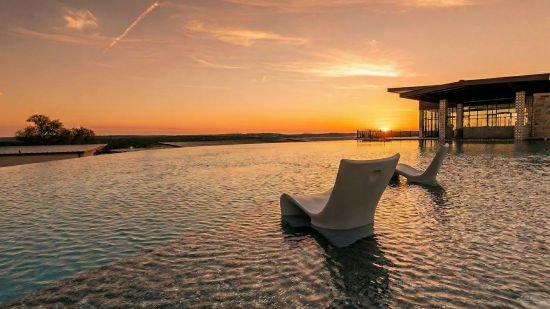
The tanning ledge—typically about six inches deep—has become one of the most popular elements in modern pool design. It offers a place to sit in the water, relax in a lounge chair, read a book, or enjoy a drink while staying cool.
For many families, it becomes the most frequently used area of the entire pool.
Designing Beyond the Water
Great backyard environments rarely revolve around the pool alone.
Fire features are a popular addition because they create a compelling contrast between fire and water. The combination produces a visual balance that feels both dramatic and inviting.
A fire pit or fire feature also extends the usefulness of the space into the evening hours, giving homeowners and guests a place to gather after the sun goes down.
Designing for the Long Term
A pool should feel just as appropriate ten years from now as it does the day it is finished.
That longevity often comes from avoiding overly unusual shapes or materials that may quickly fall out of style. Timeless proportions and thoughtful material selection help ensure that the design remains relevant as tastes evolve.
When done well, the pool feels like it has always belonged to the property.
A Philosophy of Functional Luxury
Ultimately, the most successful pool designs balance beauty with practicality.
Luxury features and dramatic design elements can certainly elevate a project, but they should never come at the expense of how the space actually functions.
The goal is what might best be described as functional luxury—a swimming pool that feels visually stunning while still serving the everyday needs of the people who live with it.
Because when design aligns with lifestyle, a backyard pool becomes more than just a feature.
It becomes a place where life happens.
About the Author
Bryson Jones is the owner of Watercolor Pools, a custom swimming pool builder serving Austin, the Texas Hill Country, and surrounding Central Texas communities. Known for creating resort-style outdoor environments, Bryson specializes in designing pools that blend architectural design, functionality, and long-term value for homeowners seeking luxury outdoor living.