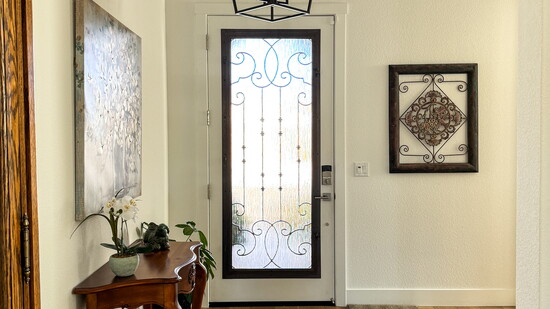
The front door may be the most important design element you’ve never considered. For many homeowners, the front door is something you stop noticing. It opens, it closes, it locks—and that’s about it. But for Laura and Vicente Villasana, owners of Door Conversions, that overlooked threshold has always held potential.
After nearly two decades focused exclusively on improving existing front doors, they’ve observed a consistent pattern. Homes can be beautifully cared for, thoughtfully designed, and filled with light—except at the very point of entry. “People often tell us they love their home, but something about the entry doesn’t feel right,” Laura explains. “It’s usually darker, heavier, and more closed off than the rest of the house.”
In regions where indoor-outdoor living is second nature, that disconnect subtly shapes how a home feels day after day.
“Light reshapes how an entry feels. Airflow affects comfort throughout the home. Security provides peace of mind. When these elements work together in one place, the effect extends well beyond the door itself,” shares Vicente. Over time, homeowners often find this improvement becomes one of the most appreciated in the house—not because it draws attention, but because it consistently enhances everyday living.
Many homeowners assume that improving a front entry requires replacing the door entirely or adding exterior elements that alter the home’s appearance. Both options can feel costly, disruptive, or out of step with the original design. The Villasanas offer a seamless alternative. By working within the existing door, the process introduces light, airflow, and security without asking homeowners to start over.
The concept behind Door Conversions was developed and patented by its founders, making it a one-of-a-kind solution for transforming existing front doors. “When people realize the door they already have can be transformed, there’s often a sense of relief,” Vicente says. “They weren’t looking for a renovation. They just wanted the home to feel more comfortable.”
The change doesn’t announce itself. Instead, it unfolds naturally—often when daylight reaches the entry for the first time. Homeowners often describe the result as less of an upgrade and more of a correction. The door simply looks as though it belongs. “The best reactions are quiet,” Laura noted. “People pause, take it in, and realize how much lighter the space feels.”
Every transformed door begins with an intricate construction process. “Each wrought iron insert is made in workshops where artisans hand-forge and weld the iron, ensuring that no two pieces are identical,” says Vicente “The local specialists apply a baked-on powder-coat finish in the desired color. The tempered, dual-pane, UV-protected glass is also manufactured locally by experts in architectural glazing, creating a combination of durability, craftsmanship, and modern performance.”
The wrought iron insert is seamlessly integrated into the existing door during installation, with a section modified to fit the design. Homeowners can choose from traditional, modern, or contemporary styles to complement their home’s architecture.
Ventilation occurs when the inner door is unlatched, letting cross-breezes flow while the wrought iron insert keeps the home secure. “Discreet screens—available in standard, pet-resistant, or metal security configurations—remain virtually invisible from the exterior while allowing air to circulate freely,” says Vicente. This also ensures security further as the main door can remain deadbolted.
Rather than competing with the home’s architecture, each design is customized to complement it. The goal is cohesion, not contrast. “We want the door to belong to the house,” Vicente says. “When it’s done right, it doesn’t look added on.”
The installation process reflects the same philosophy as the design. There’s no demolition, no structural changes, and minimal disruption to the home. “Most installations take less than two hours,” Vicente shares. “Homeowners often comment on how quickly the transformation happens—and how immediately the home feels different.”
During installation, attention is also given to how the door functions overall. Small adjustments ensure it opens and closes smoothly, reinforcing the idea that an improvement should feel good in daily use, not just look good in photos.
Unlike renovations that make a strong first impression and fade into the background, this is the kind of change homeowners tend to value more over time. The entry grows brighter. The home feels more connected to the outdoors.
At its core, this approach isn’t just about doors—it’s about how a home welcomes its occupants, how light flows, how air moves, and how small, thoughtful changes quietly enhance everyday life. Sometimes, the most meaningful upgrades are the ones that simply make a house feel more like home.
Visit doorconversion.com for more information or to schedule your free consultation.
"Homeowners often find this improvement becomes one of the most appreciated in the house—not because it draws attention, but because it consistently enhances everyday living."
"We want the door to belong to the house. When it’s done right, it doesn’t look added on.”