First, Let's Settle the "Which Laser?" Panic
If you've ever tried to research laser treatments online, I have a pretty good idea of how that went. You started with a simple question — "how do I get rid of these sun spots?" — and forty-five minutes later you're buried in a Reddit thread debating the differences between IPL, BBL, Fraxel, CO2, Halo, Clear + Brilliant, and seventeen other acronyms you've never heard of, and now you're more confused than when you started.
The laser industry rarely makes this easy to understand.
So let me be your guide.
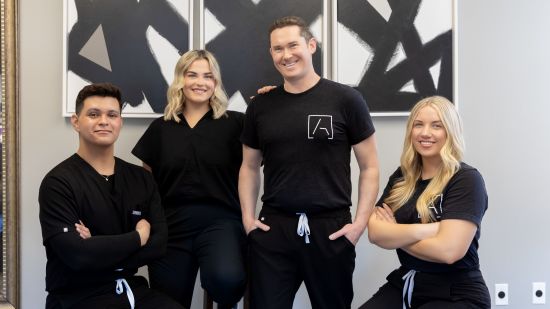
I'm Morgan Gale, CRNP, Medical Director of Aesthetic Artistry Laser Center. I've been working with laser and light-based devices for nearly 25 years. I've seen the technology evolve dramatically, treated tens of thousands of patients across a wide range of skin concerns, and I genuinely love this work. Lasers are one of the most powerful tools we have for transforming skin — when used correctly, on the right skin, by someone who knows what they're doing.
In this article, I'm breaking down the world of laser skin treatments in plain English. What the different types do. What they treat — and what they don't. What to expect. And how we determine the right treatment, or combination of treatments, for your specific skin.
The Lawn Care Analogy: Understanding Your Skin
Imagine your skin as your front lawn. A healthy lawn needs regular maintenance: watering, mowing, fertilizing, and routine professional attention. When you neglect a lawn — too much sun, not enough care, years of wear — you end up with dead patches, discoloration, weeds, and uneven texture. The same thing happens to your skin.
Sun damage, hormonal changes, acne scars, large pores, fine lines, uneven tone — these are the "dead patches and weeds" of your skin lawn. And just like a lawn, you have options:
A light treatment (like a facial or gentle peel) is like a good watering — great maintenance, keeps things looking tidy, but won't fix deep-rooted problems.
A mid-level treatment (like IPL or a non-ablative laser) is like fertilizing — stimulates new growth, improves overall health and appearance, addresses surface-level issues.
A more aggressive treatment (like Helix fractional CO2 resurfacing) is like bringing in professionals to aerate, strip, level, and reseed — more intensive, more recovery time, but transformative.
The right treatment depends on the state of your skin and how much time you're willing to invest in the process.
Lasers vs. Light: What's Actually the Difference?
Not everything called a "laser treatment" is technically a laser. Some devices use broad-spectrum light — IPL (Intense Pulsed Light) or BBL (Broad Band Light) — rather than a single focused wavelength. Both are effective, but they work differently and suit different concerns.
Laser (focused wavelength) A laser emits a single, precise wavelength of light targeted to a specific chromophore — the thing in your skin the laser is attracted to. This could be melanin (pigment), oxyhemoglobin (blood vessels), or water (tissue itself). Because lasers are precise, they can be dialed in to treat specific concerns with a high degree of control.
IPL / Broadband Light (broad spectrum) IPL devices emit a broad range of wavelengths simultaneously — more like a spotlight than a laser pointer. This makes them excellent for overall skin rejuvenation, treating multiple concerns in one session (like brown spots and redness together), and long-term skin maintenance.
Neither is inherently better. They're different tools for different jobs. An experienced provider knows which one to reach for, and when to use both in combination.
The Main Categories of Laser & Light Treatments
1. Photofacials — The All-Around Skin Rejuvenator
If I had to pick one treatment for mild, all-encompassing skin rejuvenation, it would be our signature laser photofacial. At our practice, we use Picosecond technology and the VBeam — a vascular laser considered the gold standard for sun damage treatment.
What does it treat?
Sun damage and brown spots
Redness, rosacea, and visible blood vessels
Uneven skin tone and texture
Early signs of aging — fine lines, dullness, loss of radiance
Melasma (in certain cases, with the right protocol)
How does it work? Laser light is absorbed by the pigment in brown spots and the oxyhemoglobin in red vessels. The heat destroys the targeted cells, which the body naturally clears away. Brown spots typically darken and flake off within 5–7 days. Redness reduces as vessels are reabsorbed.
What does it feel like? Most patients describe it as a rubber band snap — quick and manageable. We use a cooling gel and the device has a built-in cooling mechanism. No numbing required for most patients.
Downtime? Minimal. Some redness for a few hours. Brown spots will temporarily darken — we call this "peppering." It looks worse before it looks better, which is a sign the treatment is working. Most patients return to their normal schedule immediately.
How many treatments? A series of 3–5 treatments spaced 3–4 weeks apart, followed by maintenance sessions twice a year.
2. Non-Ablative Lasers — Stimulate Without Disrupting
Non-ablative lasers deliver heat energy into the dermis to stimulate collagen production — without removing or disrupting the skin's surface. Think of it as training your skin to produce more of its own scaffolding from the inside out.
What does it treat?
Fine lines and mild to moderate wrinkles
Skin laxity
Overall skin quality and radiance
Mild textural concerns
The key advantage is minimal downtime — some redness for about two days. The tradeoff is that results are more gradual compared to ablative treatments. These are excellent for maintenance and for patients who want consistent improvement without any visible recovery.
3. Non-Ablative Fractional Resurfacing — The Middle Ground
Fractional lasers are one of the most significant innovations in laser technology. Instead of treating 100% of the skin surface, a fractional laser creates thousands of tiny microscopic columns of treated tissue — surrounded by untreated skin. Those untreated areas become the healing reservoir, accelerating recovery while still delivering meaningful results.
Think of aerating a lawn. You're not tearing up the whole thing — you're creating channels that allow healing signals to penetrate deeper while the healthy skin around them speeds recovery.
Non-ablative fractional lasers (like Clear + Brilliant or Fraxel Restore) stimulate collagen without removing tissue. More comfortable, less downtime, and well-suited for maintenance and early aging concerns.
4. Ablative Laser Resurfacing — The Full Reset
Ablative lasers remove the outer layers of skin in a controlled way, triggering the body's wound-healing response and stimulating significant new collagen production. They vaporize tiny columns of tissue, require real recovery — typically 5–9 days — but produce dramatically more transformative results.
This is the category where significant change happens. Dramatic improvement in lines, wrinkles, scars, texture, and overall skin quality. We have a full article dedicated to our Ultra CoolPeel and Fractional CO2 resurfacing — stay tuned.
5. Laser Hair Removal — The Gift That Keeps Giving
Laser hair removal works by targeting the melanin in the hair follicle. The heat destroys the follicle's ability to produce hair. Because it targets pigment, it works best on darker hair against lighter skin — though modern devices have significantly expanded the range of treatable skin and hair types.
Multiple sessions are required because hair grows in cycles and lasers are only effective on hair in the active growth phase. Typically 6–8 sessions spaced 4–6 weeks apart produce dramatic reduction, with touch-up sessions as needed.
For many patients, it's genuinely life-changing. No more razor burn, ingrown hairs, waxing appointments, or last-minute panic before the beach.
6. Laser Vascular Treatments — Goodbye, Broken Capillaries
Those small red vessels on your nose and cheeks? The visible capillaries on your legs? Laser vascular treatments target the oxyhemoglobin in blood vessels, causing them to coagulate and be reabsorbed by the body. The result is clearer, more even-toned skin with significantly less visible redness.
Precise, targeted laser energy outperforms IPL for individual, prominent vessels. We select the right device based on the type, size, and location of the vessels being treated.
Who Is a Candidate for Laser Treatments?
Most people — but not all treatments are right for all skin types.
Fitzpatrick Skin Type: Why It Matters
Dermatologists and aesthetic providers use the Fitzpatrick Scale — ranging from Type I (very fair, always burns) to Type VI (deeply pigmented, never burns) — to guide laser selection. This matters because lasers that target melanin can cause hyperpigmentation or hypopigmentation if used at inappropriate settings on darker skin tones.
This is not a reason to avoid lasers if you have a deeper skin tone. It's a reason to see a highly experienced provider. At AALC, we have extensive experience treating diverse skin tones and will never recommend a treatment that isn't safe for your skin.
What Makes a Good Candidate?
Realistic expectations
Willingness to commit to aftercare — daily SPF 30+ post-treatment is non-negotiable
No active skin infections, open wounds, or certain conditions in the treatment area
Not pregnant or breastfeeding
Not on photosensitizing medications — always disclose your full medication list
No recent significant tan — elevated melanin from sun exposure can interfere with laser targeting and increase risk of side effects
What to Expect: Your Laser Treatment Journey at AALC
Step 1: The Consultation
Every laser journey starts with a thorough consultation. We analyze your Fitzpatrick skin type, primary concerns, skin history, lifestyle, and goals. We set realistic expectations — I would rather tell you upfront that you'll need a series of treatments and have you amazed at your results than oversell a single session and leave you disappointed.
We may recommend a pre-treatment skincare protocol — hydroquinone for melasma patients, retinol for texture concerns, or a solid SPF routine — to prepare your skin and optimize results.
Step 2: The Treatment
Skin is thoroughly cleansed and prepped
Protective eyewear is provided — non-negotiable with any laser or light device
Cooling gel may be applied
Treatment is performed — ranging from 20 minutes (a quick IPL) to 100+ minutes (full-face fractional CO2)
Post-treatment soothing products are applied
Detailed aftercare instructions are provided
Step 3: The Recovery
Photofacial: Minimal downtime. Brown spots darken and flake within 5–7 days.
Non-ablative laser: Redness and mild swelling for 2 days.
Non-ablative fractional: 2–5 days of redness and a sandpapery texture as microscopic treatment zones heal.
Ablative fractional / CO2: 5–9 days of redness, swelling, and peeling. A real recovery — but we send you home with everything you need, including a complimentary oxygen facial as part of the recovery process and routine check-ins throughout.
During recovery, sun protection is everything. Gentle cleansing, prescribed healing products, and patience.
Step 4: The Results — and the Long Game
The best results are not always immediate. With treatments that stimulate collagen, you're triggering a biological process that takes time. Collagen remodeling occurs over 3–6 months. What you see at two weeks is not your final result. What you see at three months is better. What you see at six months is often remarkable.
This is why we take before and after photos — because gradual improvement can be hard to perceive when you're looking at yourself every day. The photos tell the real story.
The Power of Combining: Building a Laser Treatment Plan
The most transformative results come from a thoughtfully designed treatment plan that combines the right devices, in the right sequence, targeting the right concerns at each layer of the skin.
At AALC, we might combine:
A Photofacial to address pigmentation and redness at the surface
A non-ablative laser to stimulate deeper collagen production
A fractional treatment to address textural concerns like pores and mild scars
A medical-grade homecare regimen to maintain and amplify results between treatments
Some treatments can be done in the same session — we call these "laser cocktails." Others need to be spaced appropriately. The goal is to systematically address every concern in the most efficient and effective way possible.
Laser Myth Busting
Myth #1: "Lasers are only for fair skin." Modern laser technology has advanced significantly. An experienced provider with a diverse device arsenal can safely and effectively treat a wide range of skin tones. Ask about your provider's experience with your specific skin tone — it matters.
Myth #2: "Laser treatments are extremely painful." Most patients are surprised by how manageable treatments are. BBL/IPL feels like a rubber band snap with warm light. Non-ablative treatments feel like warm prickling. More aggressive ablative treatments can be more uncomfortable, but we have numbing protocols and the treatments themselves are relatively brief.
Myth #3: "One treatment is enough." A series of treatments produces far better results than a single session. We'll always be transparent about how many treatments we recommend and why.
Myth #4: "If you stop getting laser treatments, your skin gets worse." No. If you stop, your skin simply continues to age naturally. You won't experience accelerated aging. Think of it like going to the gym — stopping doesn't make you worse than if you'd never gone. You just stop making progress.
Myth #5: "Laser treatments are just for your face." We treat the neck, chest, hands, arms, legs, and back. The chest and hands are often the biggest giveaways of age — and among the most gratifying areas to treat because the improvement is so noticeable.
Myth #6: "I don't need lasers — I use good skincare." Topicals work at the surface. Laser energy works in the dermis — the structural layer where collagen lives. They are complementary, not interchangeable. The best approach uses both.
The One Thing I Cannot Stress Enough: SPF
UV radiation is the number one cause of premature skin aging — responsible for fine lines, brown spots, loss of elasticity, uneven tone, and skin cancer. After any laser treatment, your skin is more photosensitive than usual. UV exposure during healing can undo results and cause hyperpigmentation.
SPF 30 or higher, every single day, rain or shine. Non-negotiable.
Why Laser Expertise Matters — and What Sets AALC Apart
Lasers require extensive training, ongoing education, hands-on experience, and genuine clinical judgment. The wrong settings, the wrong device, or the wrong treatment for the wrong skin type can cause real harm — burns, scarring, hyperpigmentation that takes months to resolve.
At AALC, laser treatments are a cornerstone of our practice — not an add-on. I've been treating patients with energy-based devices for nearly 25 years. Our team undergoes continuous education as technology evolves. We've been recognized four times in a row as the Best in the DMV for advanced medical and laser cosmetic practice.
When you come to AALC for a consultation, you're not getting a cookie-cutter treatment menu. You're getting a personalized analysis of your skin, a thoughtfully designed treatment plan, and the expertise to execute it safely.
Quick-Hit FAQ
How do I know which laser treatment is right for me? That's exactly what the consultation is for. It depends on your skin type, concerns, budget, and downtime tolerance — which is why we evaluate your skin thoroughly before recommending anything.
Can I combine laser treatments with other aesthetic treatments? Yes. Some of our best outcomes come from combining laser treatments with injectables like Botox and fillers, medical-grade facials, or microneedling. Sequencing matters — some combinations work in the same visit, others need to be staggered.
Will laser treatments make my skin look unnatural? Not when done correctly. The goal is to restore your skin to its healthiest, most radiant version — not to make it look like a different person. Clear, even, glowing, healthy.
How much do laser treatments cost? Pricing varies by device, treatment area, and number of sessions. We provide transparent pricing and a clear treatment plan with associated costs before you commit to anything. We also offer package pricing and membership programs for ongoing maintenance.
What if I've had laser treatments elsewhere that didn't work or caused problems? Come talk to us. We see patients regularly who've had suboptimal results or complications from treatments performed elsewhere. With over 20 different lasers, we often have options other offices don't carry. We'll give you an honest assessment and a realistic path forward.
Is there a best time of year to get laser treatments? Fall, winter, and early spring are traditionally the most popular times — particularly for ablative and more intense resurfacing — because UV exposure is lower. That said, we perform laser treatments year-round with appropriate precautions. Consistent sun protection is the constant, regardless of season.
The Bottom Line
Laser skin treatments represent some of the most powerful anti-aging technology available in medical aesthetics. They can address concerns that skincare or injectables alone cannot touch — turning back years of sun damage, improving skin texture and tone in genuinely transformative ways.
But they require the right device, the right settings, the right preparation, and the right aftercare. Most importantly, they require the right provider.
If you've been curious about lasers — whether you want to address sun spots, years of cumulative damage, texture and scars, or simply invest in your skin's long-term health — a consultation at AALC is the first step. It costs you nothing but a little time.
Your best skin is still ahead.
Ready to explore laser treatments? Book your consultation at aestheticartistrymd.com or call your nearest AALC location — North Bethesda, Annapolis, or Arlington.
Aesthetic Artistry Laser Center North Bethesda · Annapolis · Arlington aestheticartistrymd.com | @aestheticartistrylaser | @theaestheticvisionary