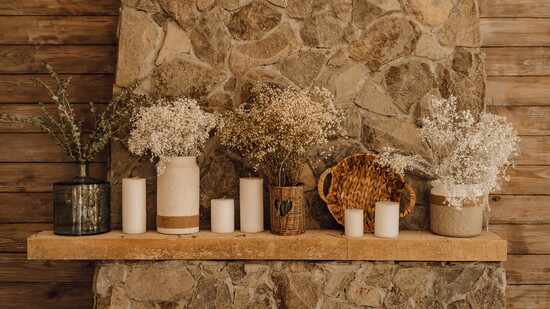
The Rule of 3 is a classic interior design principle that says objects arranged in groups of three (or other odd numbers) are more visually appealing, dynamic, and natural to the eye than even-numbered groupings.
Why it works
- Creates movement: Odd numbers prevent symmetry from feeling stiff or predictable.
- Feels balanced, not staged: The eye naturally moves across the arrangement instead of stopping in the middle.
- Adds depth and interest: Three items allow variation in height, texture, and shape.
How designers use it
- Vignettes: A tall object + medium object + small object (e.g., vase, book stack, decorative bowl).
- Color: One dominant color, one secondary color, and one accent color.
- Textures: Mix smooth, rough, and soft elements (glass, wood, fabric).
- Furniture styling: Three pillows on a sofa, three accessories on a coffee table, three frames leaning on a console.
Pro tip
Keep the items connected but not identical; vary in height and shape while maintaining a common thread, such as color, material, or theme.
In interior design, the most powerful tools are often the simplest. One of the most enduring and surprisingly effective principles designers rely on is the Rule of Three. This classic guideline suggests that objects arranged in groups of three (or other odd numbers) are more visually appealing, engaging, and natural to the human eye than even-numbered groupings. While it may sound almost too simple, the Rule of 3 quietly shapes some of the most polished and inviting interiors you admire.
At its core, the Rule of 3 works because it creates movement and balance without symmetry. When we look at a pair of objects, our eyes tend to divide the space evenly, which can feel static or overly formal. Add a third element, and suddenly the arrangement gains energy. The eye moves from item to item, taking in the composition as a whole rather than stopping in the center. This subtle visual journey is what makes a room feel layered, intentional, and alive.
Designers frequently apply the Rule of 3 when creating vignettes, those small moments throughout a home that feel styled but not staged. Think of a console table topped with a tall vase, a medium-height lamp, and a low decorative bowl. Each piece plays a role: one anchors the arrangement, one supports it, and one softens it. Together, they create harmony through contrast, height, scale, and shape, working together rather than competing.
The rule also extends beyond objects to color and texture, two elements that define the mood of a space. A well-designed room often features three primary colors: a dominant hue that sets the tone, a secondary color that supports it, and an accent that adds personality. The same idea applies to texture. Mixing something smooth, something rough, and something soft, such as glass, wood, and fabric, adds depth and warmth while keeping the room visually balanced.
Furniture styling is another place where the Rule of 3 quietly shines. Designers often arrange three pillows on a sofa instead of two, or style a coffee table with three elements rather than crowding it with many small accessories. On open shelving, groups of three objects, perhaps a framed photo, a sculptural piece, and a small plant, help shelves feel curated without becoming cluttered. The odd-number grouping keeps the eye moving while allowing each item to stand on its own.
What makes the Rule of 3 especially appealing is its flexibility. While three is the most common number, the principle applies to other odd numbers as well, such as five or seven, especially in larger spaces. The key is avoiding perfect symmetry and repetition. Items should feel connected, but not identical. Varying height, shape, or finish while maintaining a unifying element, like color, material, or theme, keeps the arrangement cohesive yet dynamic.
For homeowners, the Rule of 3 offers an easy entry point into professional-level styling. It removes the guesswork from decorating and replaces it with a simple framework that works in nearly every room. Whether you’re refreshing a mantel, styling a nightstand, or pulling together a dining table centerpiece, thinking in threes encourages restraint and intention.
Ultimately, the Rule of 3 isn’t about strict rules or rigid formulas. It’s about creating visual rhythm and allowing a space to breathe. When used thoughtfully, it transforms everyday objects into moments of quiet sophistication. Simple, timeless, and endlessly adaptable, the Rule of 3 proves that great design doesn’t have to be complicated; it just has to be considered.
You too can become your own designer when applying The Rule of 3 of odd-number groupings to create balance, movement, and visual interest, helping interiors feel intentional, layered, and effortlessly styled rather than symmetrical or staged.