My toddler sits on his knees, his marble run spread out on his plaid rug. “Mama, play with me,” he begs.
But I am furiously typing away at my laptop, buried in work. I feel a prick of guilt.
Then I remember what my next-door 70-year-old neighbor, Mr. Gary, told me: whenever you need help, I’m here, doing nothing. Retired, he’s dubbed it his "sit in the recliner and play Solitaire all day" phase. He admits he doesn’t like it.
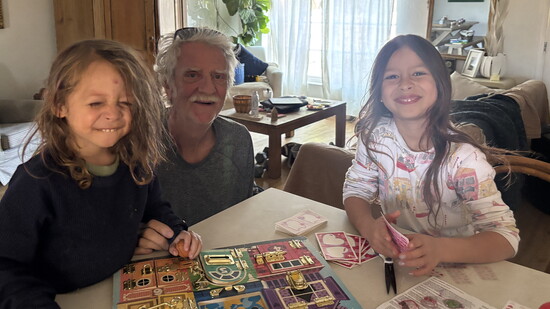
Ever since the day my husband asked him for help and I asked him to dinner as a thank-you, he’s become family. So on this Tuesday, I recruit him to come over. I sit nearby as my toddler and him build their wooden towers, and I’m relieved to be able to work guilt-free finally.
In the afternoon, Mr. Gary helps my middle child fill out her Valentine’s Day cards, painstakingly spelling each classmate’s name.
I invite him to stay for dinner, as I so often do, because he craves company just as much as I crave help.
We take daily walks together, my husband mows his lawn and we exchange pet-sitting services. Mr. Gary even taught us how to build a fire the proper Boy Scout way.
But Mr. Gary isn’t the only neighbor we are close to. There’s also Ms. Linda, or “Galinda,” my daughter affectionately calls her, who is in her early 70s. After I found out she loves to write, I invited her to my weekly writer’s critique group, forming an endearing friendship.
Two summers ago, I stood in her raised garden beds, breaking up the soil with her fancy tiller so my daughter and I could grow vegetables under her tutelage.
She gave us unlimited access to her backyard to water, weed and harvest the bounty, and taught us how to protect little offshoots with old sheets.
Two streets down, we also have neighbors with kids the same age as ours. The gaggle of them climb trees, ride bikes and practice skateboard tricks, while we parents talk for hours, fold each other’s laundry and drink coffee. On the weekends, we play Settlers of Catan or watch movies together.
A few generations ago, none of this would have been novel. Children played until the dinner bell summoned them home. Neighbors lingered on porches. Adults, I’m told, looked out for one another’s children as they darted from house to house.
Before that, for most of human history, tribes, compounds and villages shared the work of daily life. Childrearing was a community endeavor.
Yet somewhere along the way, we began retreating indoors. Historians point to the Industrial Revolution as a turning point. Households became smaller. Families scattered geographically. Social circles shrank.
In this garage-door era, we’ve lost some of the very relationships that helped people thrive.
Research suggests that meaningful intergenerational relationships benefit both children and older people. Older adults who maintain strong social connections experience lower rates of loneliness and depression, better physical health, and a greater sense of purpose.
One study even found that older adults who walk daily and interact with friends or family are less likely to develop dementia.
Children benefit, too. Studies found that relationships with older adults can help them develop empathy, respect for others, practical life skills, and stronger emotional well-being.
And when it comes to raising kids in a neighborhood, children are said to benefit from opportunities for age-appropriate independence that build their confidence, resilience, and social skills. This can look like biking to a nearby friend’s house, knocking on a neighbor’s door, or navigating small challenges without an adult to intervene.
In my experience, our children have learned to lean on community, and that friendship doesn’t come with an age limit. An older man has a reason to get out of his recliner. Dogs are walked, gardens shared, and dinner tables always seem to have room for one more.
And I am not raising my children alone.
Our children have learned to lean on community, and that friendship doesn’t come with an age limit.