Community building does not always require a committee, a calendar invite, or a name tag. Sometimes, it starts with a coffee shop, a library, a porch, or simply saying hello to someone you see every week.
For sociologist Kalinda Fisher, that simple idea is at the heart of her work with Advocate Market Research and The Great Reset. Her interest in belonging began early. “I’ve always been someone who asks, ‘Why?’ My mother could tell you stories from the time I was very young - wanting to understand why people celebrated differently, lived differently, believed different things, or simply navigated the world in different ways.”
That curiosity eventually led Fisher to sociology and to a deeper understanding of what brings people together. Growing up in a small, largely homogeneous town before attending a diverse university exposed her to people with vastly different backgrounds, beliefs, and experiences. Those interactions helped shape her belief that differences do not have to create distance.
That idea became the focus of her inaugural TEDx Franklin talk, which explored the concept of “third places,” the spaces outside of home and work where people can gather, interact, and simply be part of a community.
According to Fisher, a true third place is about much more than its physical location. “A true third place is as much about the people as it is the place.” Think coffee shops, libraries, parks, pubs, recreation centers, houses of worship, or even a neighbor’s front porch. The magic is not necessarily in the coffee, the books, the playground, or the rocking chairs. It is in the opportunity to linger without an agenda.
Franklin has plenty of places where that kind of connection can happen. The library, for example, offers far more than books. It can be a place to hear stories, attend a book signing, learn something new, make something, or share a conversation with people you might never otherwise meet.
Harlinsdale Farm creates connection through polo events, The Round Up, Family Day, and the Pilgrimage Festival, which bring people together. Even the newest coffee shop or a familiar spot at the YMCA can become a place where faces become familiar, and conversations become friendships.
Fisher believes those everyday interactions are increasingly important. When she started The Great Reset, she was concerned about the “bubblification” of society, the tendency to surround ourselves with people who think and live much as we do. Now, she sees another challenge: exhaustion.
People are busy, tired, and often connected to their phones while being surprisingly disconnected from the people around them. That makes the smallest interactions meaningful. “Those small encounters stretch our world. Familiar faces become acquaintances. Acquaintances become neighbors. And over time, neighbors become community.”
One example Fisher experienced firsthand was a Porch Talk at the library hosted with the McLemore House and the African American Heritage Society. Over a meal centered around soul food, she listened to stories and talked with neighbors she had never met. Nothing had to be forced. People simply showed up, shared a space, and allowed connection to happen.
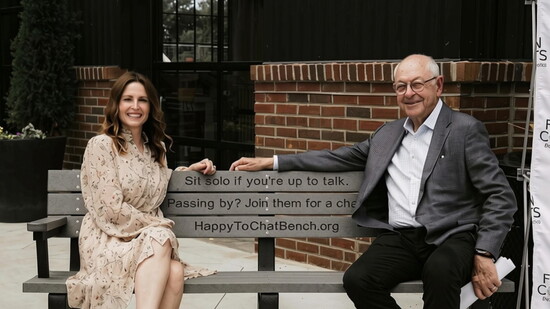
For Franklin residents looking to feel more connected, Fisher recommends starting small. Smile at someone. Hold the door. Look up from the phone. Say hello to the person you keep seeing at the coffee shop, the Y, or the library. Or, if you spot one of the area's new “Happy to Chat” benches, take a seat. Community does not always begin with a grand gesture. Sometimes it begins with three very simple words: “I see you.”
Franklin has plenty of places to gather, but it is the people who show up, linger, and connect who turn those places into community.
“Those small encounters stretch our world. Familiar faces become acquaintances. Acquaintances become neighbors. And over time, neighbors become community.”