Some of the most important aspects of our health are also the easiest to overlook.
Occupational Therapist Rakhi Srivastava has spent her career helping people pay attention. As owner of Queen City Pelvic Health and Wellness (QCPH) in Anderson Township, she leads a practice where pelvic health is treated with the importance to overall health and wellness that patients deserve.
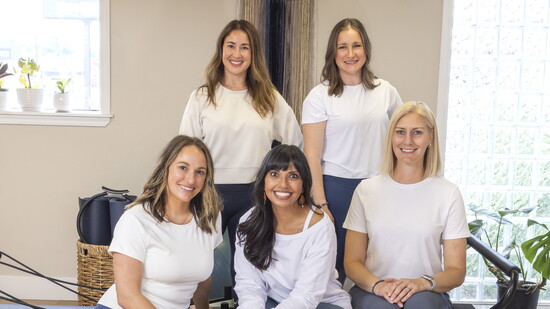
What began in 2022 with one therapist working out of a single room has grown into a practice of five expert therapists who have expanded their skill sets to deepen QCPH offerings, including pelvic floor therapy, orthopedic and sports physical therapy, one-on-one Reformer Pilates, dry needling and specialized postpartum care.
An Anderson native, Rakhi became interested in pelvic health in 2017. Throughout her long history in health care, she witnessed many patients struggling with incontinence and other concerns that can affect daily life. After completing specialized training, she helped grow a pelvic health hospital program. But as it expanded, so did the waitlist—eventually reaching 90 patients, with months-long delays for care.
The burnout Rakhi experienced in the hospital setting ultimately led her to open Queen City Pelvic Health & Wellness. Today, the practice takes a whole-body approach to pelvic health, looking beyond the bladder, bowel and reproductive organs to consider movement patterns, muscle tension, habits, routines and overall function.
“The pelvis is central to the body's stability and balance, and problems here can cause issues with the rest of the body,” explains Rakhi. “That’s why it was important for us to offer general physical therapy and Pilates with highly trained and skilled therapists.”
Just as important, Rakhi wants patients to feel comfortable discussing concerns that can be difficult or embarrassing to share. The team takes a trauma-informed approach and believes listening is central to the process. “Most clients will tell you what you need to do to help them if you just allow them to talk and tell their story,” Rakhi shares.
Patients may seek help for urinary leakage, constipation, pelvic heaviness, pelvic or hip pain, pregnancy-related concerns or postpartum issues. Rakhi notes that many of these issues are “common but not normal.”
For postpartum care, the practice recognizes recovery as a process influenced by many factors, rather than expecting new mothers to simply “bounce back.” Their postpartum home evaluations provide additional support during the first weeks after delivery, addressing everything from mental and physical health to pain, mobility, feeding and monitoring for serious conditions like postpartum preeclampsia.
“If we take care of mothers, we take care of families. If we take care of families, we take care of communities,” affirms Rakhi.
For QCPH, the work is ultimately about more than treating a particular condition. It’s about helping people feel comfortable in their bodies and confident they can participate in everyday life.
That same philosophy extends to the team Rakhi built. Six members live in or near Anderson Township, and five grew up in the area. “We love helping build up the communities where we live,” Rakhi tells us. She also believes caring for her providers is a key to successful outcomes. “A burned-out therapist cannot be the best therapist, and mental health matters,” she emphasizes.
It’s a mindset that starts in the treatment room but reaches well beyond it—helping clients feel heard, supported and better equipped to care for themselves at every stage of life.
“If we take care of mothers, we take care of families. If we take care of families, we take care of communities.”