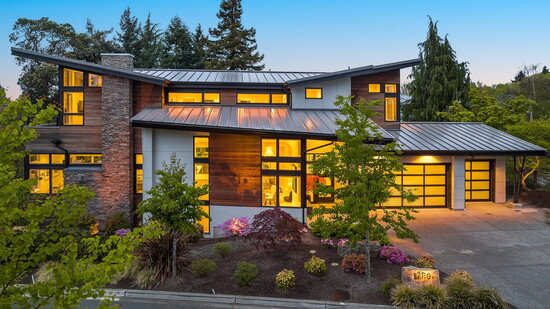
Homes shape our lives in ways that are often felt before they are understood.
Beyond style or scale, a well-considered home supports how we move through our days—how we gather, rest, focus, and reconnect. It reflects not only personal taste, but values, rhythms, and a relationship to place.
For this Home Issue, we invited a small group of professionals whose work places them close to that lived experience. Architects, builders, designers, realtors, and home service experts—people who spend their careers observing what truly endures once the doors are closed and life begins.
What follows is not a list of services or credentials. It’s a collection of perspectives. Insights shaped by time, repetition, and care. Ideas that rarely announce themselves, but quietly define how a home feels to live in—day after day, year after year.
Together, these voices form a conversation about comfort, longevity, and belonging. About the details that matter most, even when they’re hard to name.
This is a look behind the scenes—at the minds shaping the homes that shape us.
Rachel Schindler, Principal & Managing Broker RE-VESTA GROUP
1. What’s something professionals notice about a home that’s hard to describe, but easy to feel?
We tend to notice how a home feels the moment you step inside—its solidity, balance, and quality of construction. Are floors level, how does sound carry from room to room, and even how the outside noise is absorbed are all things that professionals should be paying attention to. These subtleties are hard to articulate, but they immediately signal comfort, care, and craftsmanship.
2. What do people often overlook about a home at first—but come to value most over time?
The community. While buyers often focus on the home itself, it’s the people around you that shape daily life. Taking the time to meet neighbors—knocking on a door, exchanging a smile, saying hello—before you make the move can help ease any transition. we often do this with our clients to make it a bit easier.
3. Looking beyond design or price, what makes people feel genuinely settled in a home here?
A sense of connection. While the home provides a personal retreat, it’s the surrounding community and the relationships you build that create a deeper feeling of home. Getting involved, forming friendships, and feeling part of something larger than your front door is what ultimately makes people feel grounded and settled here.
Mark Elster, Managing Director AOME Architects
The choice of architect is the single most powerful decision you'll make in a custom home—it literally shapes how every day feels.
Key daily influencers architects control:
- Natural light and views — Strategic windows and orientation that lift mood and energy all day (especially vital in the Pacific Northwest's variable skies).
- Flow and circulation — Intuitive layouts that make movement feel natural, not forced, reducing daily stress.
- Scale and proportion — Rooms that feel generous yet intimate, never overwhelming or cramped.
- Material tactility — Surfaces and textures that delight the senses over years of touch.
Rush it, or pick based on the wrong priorities, and you risk a lifetime of subtle frustrations: awkward space relationships, poor daylighting, spaces that fight your routines instead of supporting them.
Get it right, and the home quietly elevates everything—from the way morning sun greets your coffee to how effortlessly family life unfolds.
Michele Schuler, Founding Member, Managing Broker Realogics Sotheby's International Realty | The Schuler Team
1. What’s something professionals notice about a home that’s hard to describe, but easy to feel?
When you walk into a well-designed home, there’s an immediate sense of ease. The proportions make sense. The light lands where you expect it to. The rooms relate to each other naturally.
With experience, you develop a sensitivity to quality and cohesiveness. You notice when architecture, materials, layout, and craftsmanship are working together instead of competing with each other. It’s not about luxury or style. It’s about integrity in the design and execution.
The best homes feel settled and balanced. They don’t announce themselves. They simply feel right.
________________________________________
2. What do people often overlook about a home at first—but come to value most over time?
Early on, most people are drawn to finishes and visual impact. Over time, what they value far more is the quality of the architecture and how the home actually functions.
Thoughtful design shows itself quietly—in circulation, ceiling heights, storage, natural light, and a floor plan that continues to support daily life. Good architecture ages well. Good construction reveals itself over years, not months.
What people come to appreciate most is that the home still works. It’s comfortable. It’s durable. It continues to make sense as their life evolves.
________________________________________
3. Looking beyond design or price, what makes people feel genuinely settled in a home here?
On Mercer Island in particular, what settles people is a sense of belonging.
It’s knowing your neighbors. Building friendships. Having routines that tie you to the community—school drop-offs, familiar faces at the grocery store, someone knowing your coffee order and delivering with a smile.
A home becomes meaningful when it’s part of a larger life. When you feel connected not just to the house, but to the neighborhood and the lifestyle around it. That sense of community and connectedness is what truly makes people feel at home here.
Greg Rosenwald, Founding Broker, Compass Real Estate Seattle/Eastside
Having grown up on the Island and worked in real estate here for the past 25 years, I’ve learned that the best homes are easy to feel but hard to describe. It’s the light, the flow, and how a house lives day to day — but what really makes a home on Mercer Island special and unique is the community around it.
Nadine Stellavato Brown, Studio Stellavato
Interior design quietly directs how people live, move, and feel in their homes each day. The scale, layout, and transitions between spaces influence daily rhythms—from where conversations naturally gather to where someone can retreat for focus or rest. With the advent of open-floor-plan living, homes have become larger and more visually connected, but they can also feel overwhelming or lacking in intimacy. My approach is to shape these expansive environments into a collection of purposeful moments. By introducing defined yet inviting spaces—like a formal library or a breakfast nook—families find balance: places to come together and places to be still. Thoughtful design transforms a vast home into one that supports movement, comfort, and meaningful daily rituals.
What really makes a home on Mercer Island special and unique is the community around it. - Greg Rosenwald Compass Real Estate
Thoughtful design transforms a vast home into one that supports movement, comfort, and meaningful daily rituals. Nadine Stellavato Brown, Studio Stellavato