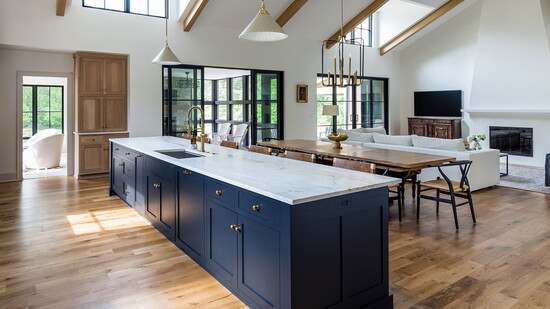
Based in Worthington, Bradley Blumensheid, the founder of Rhythm Architecture, whose residential and commercial work balances thoughtful design with real-world buildability. We sat down with Bradley to unpack when homeowners should call an architect first—and why that decision shapes the entire renovation experience.
Home renovation often begins with inspiration—a growing family, a love of entertaining, or a desire to finally make a home function the way it should. According to Bradley, one of the most common missteps homeowners make happens before the first wall is touched: calling a remodeler when an architect should have been the first call.
“The moment you’re changing the footprint, moving walls, or touching structural or utility elements, you’re no longer in cosmetic territory,” Mr. Blumensheid explains. “That’s when an architect needs to be involved.” Projects requiring permits—anything impacting structure, windows, electrical, or layout—demand detailed plans, elevations, and specifications prepared by a licensed professional. Skipping that step can lead to stop-work orders, code violations, or expensive corrections later.
Architects do more than draw plans. They solve complexity. From evaluating structural integrity to balancing design intent with budget realities, architects help homeowners understand the full scope of a project before construction begins. Engaging an architect early often saves money by avoiding redesigns, change orders, and delays caused by unpermitted or non-compliant work.
Another distinction homeowners often misunderstand is the difference between architects and interior designers. Architects focus on structural redesign and the overall spatial vision, while interior designers concentrate on furnishings, finishes, and decorative elements. The most successful projects respect both roles and engage each professional at the right time.
Equally important is the relationship between architect and contractor. While design-build firms bundle both roles, independent architects and contractors can—and should—challenge each other. That friction protects the homeowner. Contractors prioritize constructibility and cost; architects safeguard design intent, performance, and longevity. Keeping the architect involved during construction ensures value engineering doesn’t quietly erode the original vision.
In the end, successful renovations aren’t defined by beautiful spaces alone—they’re shaped by thoughtful leadership from the very beginning. When walls move, structure changes, or complexity increases, an architect brings clarity—they can oversee the contractor bidding process, drawing on trusted professional relationships, and ensuring design intent, investment, and craftsmanship remain aligned through every phase of construction. The right architectural guidance ensures renovations feel seamless, timeless, and tailored to how homeowners truly live.