There is something remarkable that happens when you hand a child a basket instead of a tablet. They notice things most adults have long stopped seeing: a butterfly resting on a fence post, the warmth of a freshly laid egg, the way a baby goat hops without a care in the world, or how muddy hands always seem to accompany the very best adventures.
At Little School on the Farm, those moments aren't interruptions to learning. They are the lesson.
Nestled on a small farm in Mt. Juliet, Little School on the Farm was born from a simple belief: children learn best when they are immersed in God's creation. Founder Jenna Gibbons, a former classroom teacher turned homeschool mom, envisioned a place where families could step away from the pace of modern life and return to something slower and more intentional - a place where curiosity mattered more than screens, life skills were valued alongside academics, and childhood itself was treated as something worth protecting.
"I felt this was a wonderful opportunity to share our farm with other families who wanted their children to step away from technology and return to a slower, more intentional childhood," Jenna says.
What began in 2022 with just a few dozen students has grown into a thriving homeschool co-op serving nearly 80 children. Each week, families gather to garden, cook, sew, care for animals, read beautiful books, and discover the rhythms of farm life together. Along the way, children build confidence through meaningful work that many families no longer experience in everyday life.
The farm has become a classroom in ways no traditional building ever could. One season, students mourned the loss of a beloved baby chicken. Days later, they gathered around to meet the new farm pup, their excitement mingling with conversations about life, loss, and the rhythms of God's creation. Moments like those can't be planned on a lesson calendar.
Just as meaningful are the quieter transformations. The child who was afraid to touch a chicken in September is collecting eggs with confidence by spring. The picky eater who once refused a garden tomato is proudly helping make fresh salsa. The quiet student who hesitated to speak is suddenly running a booth at the annual Market Day, selling homemade bread, pottery, seedlings, or sewn creations with confidence and pride.
"I have seen children transition from being nervous about trying anything new and end up jumping into puddles, collecting eggs, and digging for worms in the garden by the end of the year," Jenna says. "It is amazing to see how much they grow."
Imagination is equally important here. In the farm's natural play area, mud becomes soup, grass becomes cupcakes, and sticks become anything a child dreams they can be. In an age where so much play is prewritten on a screen, Little School on the Farm intentionally leaves room for boredom, creativity, and wonder. Those experiences develop language, confidence, problem-solving, and friendships - but perhaps more importantly, they remind children they don't need constant entertainment to experience joy.
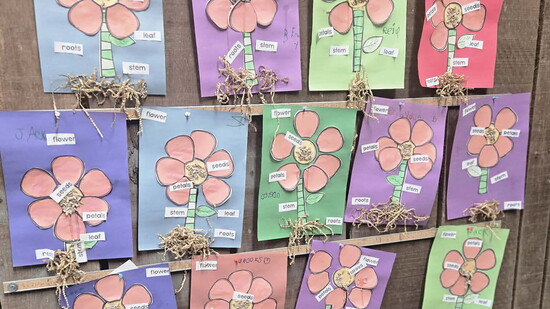
Throughout the year, students also learn gardening, food preservation, sewing, cooking with whole foods, and other homesteading skills that many families fear are disappearing. Literature, history, science, poetry, and math are thoughtfully woven into each season, proving that meaningful education doesn't always happen at a desk.
"We hope that by learning these skills, children will change their families for generations to come," Jenna says.
For Jenna, however, the greatest reward isn't teaching children how to grow vegetables or care for livestock. It's watching entire families grow alongside them. Parents begin baking together. Grandparents pass down treasured recipes. Children ask to plant gardens at home, help feed animals, or spend more time outside than in front of a screen.
"I truly believe that the closer we are to nature, the closer we are to God," Jenna says.
She believes children are far more capable than we often give them credit for, and that learning to care for God's creation shapes not only their hands, but also their hearts. Whether tending the garden, gathering eggs, reading beneath the trees, or listening to local farmers share their knowledge, every experience is rooted in the belief that slowing down creates space for wonder, gratitude, and deeper connection.
In many ways, that's the heart of Little School on the Farm. Yes, children leave knowing how to care for animals, grow food, and make something with their own hands. But they also leave believing they're capable - capable of doing hard things, caring for God's creation, and slowing down long enough to notice the beauty that's been there all along. Because sometimes the greatest lessons aren't found inside four walls at all. They're waiting in a muddy garden, a well-loved picture book, or a basket holding a still-warm egg.
"We hope that by learning these skills, children will change their families for generations to come."
"I felt this was a wonderful opportunity to share our farm with other families who wanted their children to step away from technology and return to a slower, more intentional childhood."