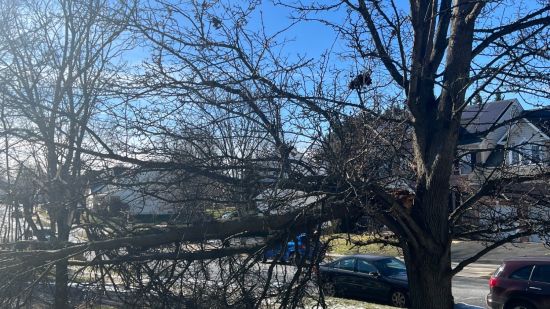
Why Bradford Pear Trees Are a Bad Choice for Planting in Frederick & Potomac, MD
AHOY, This is Micayla C. with A1 Tree Pros, a local Potomac MD tree company serving homeowners throughout Frederick County and the surrounding areas. From our team to yours, we hope you’re starting the New Years off on a positive note.
And now let’s get right to it……..
As an arborist, we dislike Bradford pears with a passion.
These trees were once extremely popular across Potomac, Frederick, and much of central Maryland.
Matter of fact, chances are if your neighborhood was developed in the 1970s, 80s, or even the early 90s, you’ve probably seen plenty of them lining streets and yards.
Why Would Contractors back then use these trees over the countless many other options?
Now the reasonable side of us wants to give contractors the benefit of the doubt. So maybe perhaps contractors at the time thought they were an ideal choice to grace yards and common areas?
But that could not be further from the truth. Bradford pears are messy trees that grow quickly, bloom early in the spring, and fill in landscapes fast.
We believe contractors got them dirt cheap and flooded the area with them. Plain and simple.
Now fast forward to the present and unfortunately, decades later, many homeowners are discovering that these trees come with serious long-term issues. As a Potomac MD tree company, the two biggest problems we see repeatedly are weak structure and ongoing, costly maintenance.
The Biggest Issue: Poor Tree Structure
Bradford pear trees are known for having very weak branch structure. Instead of developing strong, well-spaced limbs, they grow with tight, upright branch angles where multiple limbs originate from the same point on the trunk. They also develop crevices which soften over time.
As these trees mature, this growth pattern leads to:
Weak branch attachments that are prone to failure
Limbs that push and rub against each other, creating wounds
Entry points for disease and decay
A high likelihood of splitting as the canopy becomes heavier
In areas like Potomac and Frederick, where strong storms and seasonal wind are common, this structural make up creates a high risk of failure — even when the tree appears healthy from the outside.
Potomac & Frederick Weather Makes the Problem Worse
The local climate in central Maryland plays a major role in why Bradford pears fail so often. Between summer thunderstorms, heavy rain, high winds, and winter snow or ice, these trees are constantly under stress.
As a Potomac MD tree company, we frequently respond to calls involving:
Large limbs breaking during summer storms
Trees splitting after snow or ice accumulation
Emergency situations following high-wind events
Unfortunately, fallen limbs don’t always land harmlessly in the yard. We often see damage to roofs, vehicles, fences, driveways, and utility lines. These situations are stressful, expensive, and usually unexpected.
Ongoing Maintenance Costs Add Up
Many homeowners are surprised by how much work Bradford pear trees require just to remain standing. To reduce the risk of failure, these trees need frequent pruning to remove weak or overcrowded limbs.
That often means:
Hiring a professional tree service every few years
Paying for storm-related pruning or cleanup
Still dealing with sudden breakage despite maintenance
Even with proper care, pruning cannot fix the tree’s natural growth habit. Over-pruning in an attempt to “prevent” failure often causes additional problems. Too much pruning can weaken the tree, increase wind exposure, or make it vulnerable to cold damage. Over time, homeowners spend more money without gaining long-term safety or value.
Short Lifespan and Early Decline
Compared to other trees commonly planted in Potomac and Frederick, Bradford pear trees have a relatively short lifespan. While quality shade trees can thrive for many decades, Bradford pears often begin declining after just 15 to 25 years.
As the tree ages:
Structural issues worsen
Limb failures become more severe
Full removal often becomes the safest option
As a Potomac MD tree company, our goal is always preservation first. Tree removal can be expensive and emotionally difficult for homeowners. When possible, we prefer helping trees thrive — but with Bradford pears, removal is often inevitable sooner rather than later.
Unpredictable and Risky Near Homes
One of the most frustrating aspects of Bradford pear trees is their unpredictability. A tree may look healthy and full one season, then fail suddenly during the next storm.
Internally, many Bradford pears develop cracks or weak branch unions that aren’t visible from the ground. This creates:
Safety concerns for families
Anxiety during storms
Unexpected repair and emergency tree service bills
Many homeowners only realize the risk after damage has already occurred.
A Smarter Choice for Potomac & Frederick Landscapes
When you factor in:
Storm damage
Repeated pruning
Property repairs
Early tree removal
Bradford pear trees are rarely a good long-term investment.
Choosing trees with stronger structure and longer lifespans is a much better option for our local climate. While Bradford pears may offer quick spring blooms and fast growth, they often turn into expensive liabilities over time.
As a trusted Potomac MD tree company, we encourage homeowners to think long-term when choosing what to plant. The right tree can provide beauty, shade, and value for decades — without the stress, risk, and recurring costs that Bradford pears bring.
Choosing wisely from the start saves money, protects your property, and gives you peace of mind for years to come.
Happy New Years! If anyone has any questions regarding Bradford Pear Trees, please feel free to let us know.