March always walks a precarious line between winter and spring. Sunny days make you want to get out and play in the garden, while nighttime temperatures keep the ground frozen solid, even without snow cover. At least snow cover helps insulate the soil and retain moisture. For Janine Collins, botanist and owner of Botanical Concepts, this seasonal tension is a familiar rhythm in Southwest Colorado.
Spring can be confounding for gardeners in the high mountain desert, where temperature fluctuations are extreme. In a place where the weather is already unpredictable, climate change has taken that unpredictability to new heights. Over the past few years, spring has arrived warmer and earlier in the day, yet nighttime temperatures remain very cold. This can be confusing for humans because we are asleep in our warm, temperature-controlled homes and only feel the daytime warmth. Emotionally, we are ready to plant.
Nighttime temperatures, however, are the most important factor when determining when to plant. A good rule of thumb is this: if you can get a shovel into the ground, you can plant in it. Perennial seeds can also be put out at this time. Once nighttime temperatures remain above freezing, spread seeds.
If you are just beginning to create a garden space, start with trees and shrubs and go native. Native plants benefit bugs and critters, use the least amount of water, and most importantly, they are one of the most effective ways to sequester carbon right in your own backyard.
First, Amelanchier alnifolia, commonly known as serviceberry, is my favorite. There are several beautiful varieties. It is edible for all, filled with blooms in the spring, and offers a stunning color change in the fall. Cistena plum, Nanking cherry, and crabapples all bring color and texture with very little water and can handle intense heat. Sumacs come in different sizes and shapes and put on an impressive fall color display. In shadier areas, snowberry, available in both small and large varieties, offers sweet light pink blooms followed by white berries.
My top evergreen tree choices are Rocky Mountain juniper, Colorado spruce, and Douglas fir. Juniperus scopulorum, the Rocky Mountain juniper, can reach 25 by 25 feet and does take up space, but it has many hybrids that offer a wide range of height and width options. Douglas fir is a particularly beautiful tree with a softness that Colorado spruce lacks, and it grows faster.
My favorite deciduous tree is the Amur maple, Acer tataricum. It is the only maple that requires very low water, and its colorful seed pods add seasonal interest.
Seeds are the cheapest, easiest, and in my opinion, the most entertaining way to grow perennials. Watch the weather, and if there is any chance of precipitation on the horizon, throw your seeds before or during it. If moisture is not in the forecast, be sure to water generously. These are the plants I have found to be the most successful when grown from seed:
Blue grama grass (Bouteloua gracilis)
Yarrow (Achillea millefolium)
Penstemon (Penstemon spp.)
Cranesbill geranium (Geranium spp.)
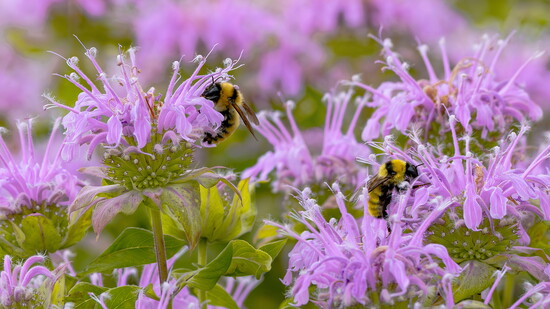
Bee balm (Monarda spp.)
Pay attention to the soil and the overnight temperatures, and your garden will tell you when it’s ready. In the mountains, timing is everything.